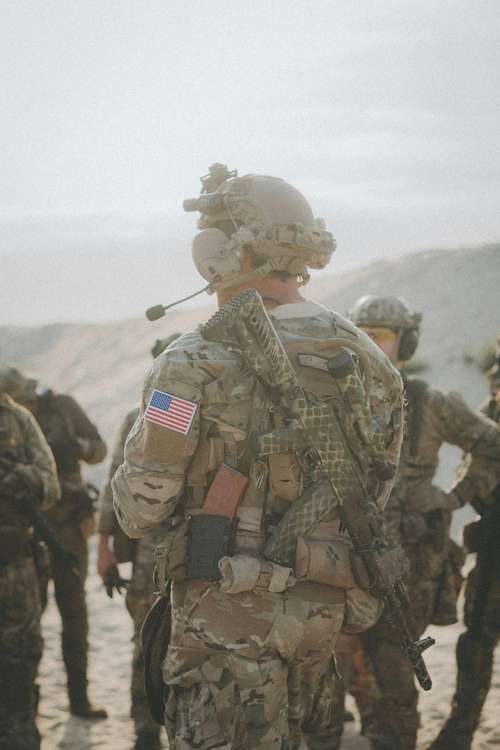
WASHINGTON D.C. – The Pentagon has placed approximately 1,500 active-duty soldiers from the U.S. Army's 11th Airborne Division on high alert for a potential deployment to Minnesota, defense officials confirmed late Saturday. The move marks a dramatic escalation in the standoff between federal authorities and state officials following days of unrest in Minneapolis.
The alert status, active as of Sunday, January 18, 2026, positions the Alaska-based "Arctic Angels" to deploy within hours if President Donald Trump invokes the Insurrection Act of 1807. This development follows a week of intensifying protests sparked by the fatal shooting of Renee Nicole Good by an Immigration and Customs Enforcement (ICE) agent during a confrontation in Minneapolis.
11th Airborne Division Preps for Domestic Deployment
Defense sources indicate that the 1,500 soldiers are drawn primarily from the 2nd Infantry Brigade Combat Team (Airborne), based at Joint Base Elmendorf-Richardson in Anchorage, Alaska. Known as the "Arctic Angels," the 11th Airborne Division is the Army's premier cold-weather warfare unit. Their selection for a potential Minnesota mission in January underscores the logistical realities of operating in the state's sub-zero winter conditions.
This specific unit's mobilization is significant. Unlike standard National Guard units often tasked with civil support, the 11th Airborne is an active-duty combat force trained for rapid deployment and high-intensity conflict. "These troops are currently on a prepared-to-deploy order," a Pentagon official stated on condition of anonymity. "They are ready to move if the President determines that federal military intervention is necessary to restore order."
Trump Threatens Insurrection Act 2026 Invocation
The military preparations come less than 48 hours after President Trump issued a blistering ultimatum on social media. In a Truth Social post on Friday, the President explicitly threatened to invoke the Insurrection Act if local leaders did not quell the demonstrations against "Operation Metro Surge," a controversial DHS initiative that has flooded the Twin Cities with over 2,000 federal agents.
"If the corrupt politicians of Minnesota don't obey the law and stop the professional agitators and insurrectionists from attacking the Patriots of I.C.E.," Trump wrote, "I will institute the INSURRECTION ACT and settle it quickly!"
Invoking the Act would grant the President the legal authority to deploy active-duty federal troops domestically, bypassing the Posse Comitatus Act which typically prohibits using the military for civilian law enforcement. Legal experts warn that such a move, largely unprecedented in recent history without a governor's request, would trigger an immediate constitutional crisis.
Minnesota Unrest News: The Catalyst for Escalation
The current crisis began earlier this month with the launch of "Operation Metro Surge," which brought an influx of federal officers to the Minneapolis-St. Paul area. Tensions reached a breaking point on January 13, when Minnesota unrest news outlets reported the fatal shooting of Renee Nicole Good during a protest outside an ICE facility.
Since the shooting, nightly demonstrations have grown in size and intensity. While many protests remain peaceful, sporadic clashes with federal agents have occurred, leading to the deployment of tear gas and rubber bullets. The Minnesota Department of Public Safety reported on Saturday that Governor Tim Walz has already mobilized the Minnesota National Guard to support local law enforcement, though they remain held in reserve and have not yet deployed to city streets.
Governor Walz Pushes Back
Governor Walz has vehemently opposed the introduction of active-duty federal troops. In a press conference Saturday evening, he characterized the Pentagon's alert order as "an unnecessary provocation" that undermines state sovereignty.
"Minnesota is capable of managing its own public safety," Walz asserted. "The presence of active-duty combat troops on our streets would only inflame the situation further. We need de-escalation, not a militarized occupation."
What Happens Next?
As of Sunday morning, the Trump Minnesota military standoff remains in a fragile holding pattern. The 1,500 paratroopers remain in Alaska, awaiting final orders. Meanwhile, Minnesota Attorney General Keith Ellison has reportedly prepared an emergency motion to block any invocation of the Insurrection Act in federal court, arguing that the statutory requirements for federal intervention—specifically the inability of state authorities to enforce the law—have not been met.
With Minnesota protest updates dominating the news cycle, the nation watches to see if the President will cross the Rubicon of deploying the 11th Airborne against American citizens on American soil.