The viral Coldplay jumbotron cheating scandal has officially reignited, transforming from a fleeting stadium embarrassment into a massive cultural flashpoint. Just days ago, Kristin Cabot, the former tech executive at the center of the controversy, broke her months-long silence in a bombshell Oprah Winfrey interview. Her revelations have flipped the script on the internet's favorite viral kiss cam fail, sparking a fierce debate over online mob justice and the terrifying reality of what experts are now calling TikTok tabloid culture.
The Kiss Cam Fail That Started It All
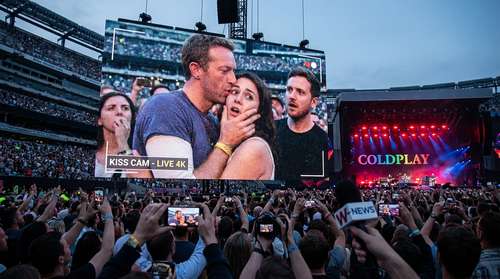
For those needing a refresher on the event that broke the internet, the saga began at a July 2025 Coldplay concert at Gillette Stadium in Massachusetts. During a routine crowd-work moment, the massive stadium camera panned to Andy Byron, then-CEO of data firm Astronomer, and Kristin Cabot, the company's chief human resources officer, in a close embrace. Realizing they were being broadcast live to 60,000 screaming fans, the pair instantly panicked. Cabot threw her hands over her face in shock, while Byron visibly crouched down, frantically trying to duck out of the frame.
Coldplay frontman Chris Martin, unaware of the corporate drama unfolding, narrated the awkwardness live on stage. He joked to the massive crowd, "Either they're having an affair or they're just very shy". A concertgoer named Grace Springer captured the 15-second interaction and uploaded it to social media. Within hours, this instance of public cheating caught on camera became a global sensation. Amateur internet sleuths identified the two executives by name, noted their respective marital statuses, and triggered a corporate crisis. The overwhelming pressure eventually led both Byron and Cabot to resign from their high-paying positions, with Byron's wife reportedly filing for divorce shortly after.
Kristin Cabot Speaks Out: The 2026 Oprah Interview
While the Coldplay concert viral clip spawned endless late-night television jokes, internet memes, and even Halloween costumes, the severe human cost of the spectacle remained hidden until this week. Sitting down for a highly anticipated interview with Oprah Winfrey, Cabot detailed the horrifying aftermath of becoming the internet's main character. She revealed that she endured months of intense, terrifying harassment. Paparazzi stalked her neighborhood for weeks, strangers repeatedly trespassed on her property to look through her windows, and hostile individuals performed drive-bys, honking and screaming obscenities while her young children were trapped inside.
Perhaps the most significant revelation from the emotional interview was Cabot's claim that the relationship was built entirely on a foundation of deception. She stated that she was already separated from her husband at the time of the concert and had confided in Byron about her painful divorce. According to Cabot, Byron deliberately misrepresented his own marital status, claiming he was in the exact same situation and actively planning a divorce from his wife. The interview explicitly highlighted a glaring double standard in how the public consumed the scandal: while Byron was widely mocked as an unfaithful boss, Cabot bore the absolute brunt of the extreme vitriol. She was relentlessly painted as a homewrecker and faced continuous death threats, a punishment far exceeding the situation.
The Rise of TikTok Tabloid Culture and Digital Mobs
The immediate cultural backlash to Cabot's interview has dramatically shifted the internet's focus toward the predatory mechanisms that destroyed her life. Academics, media critics, and everyday users are currently locked in a fierce debate over the dangers of TikTok tabloid culture, a modern phenomenon where ordinary people are subjected to intense, celebrity-level scrutiny and ruthless doxxing without any media training or protection. Professor Jenna Drenten of Loyola University recently published research highlighting how this hyper-vigilant digital environment is fundamentally eroding our basic expectations of privacy in public spaces.
We have officially entered an era where digital sleuthing is treated as a competitive team sport. Current social media algorithms actively reward users for identifying, exposing, and harassing strangers based entirely on out-of-context, bite-sized video clips. What used to be dismissed as idle stadium gossip is now weaponized content designed for mass consumption. The crowd no longer gathers just to enjoy the music; they are armed with high-definition smartphone cameras, completely ready to turn any minor misstep or private moment into monetizable outrage for their own followers.
What This Means for Social Media Privacy Trends
As we navigate the most prominent relationship scandals 2026 has to offer, the devastating Coldplay incident serves as a grim, undeniable warning about escalating social media privacy trends. The complete collapse of public boundaries means that absolutely anyone can become the target of an unverified narrative at a moment's notice. Cabot's enduring ordeal proves that the internet's insatiable demand for dramatic content rarely considers the immense collateral damage inflicted on real people and their families.
The central debate dividing the internet right now is no longer about whether two executives acted inappropriately at a rock concert. Instead, it is a profound moral argument about whether a 20-second video justifies a lifetime of severe psychological torment and permanent public shaming. As major social platforms continue to prioritize rapid virality over basic human ethics, the real question isn't if another stadium jumbotron scandal will happen, but rather whose ordinary life will be ruthlessly dismantled by the algorithm next.