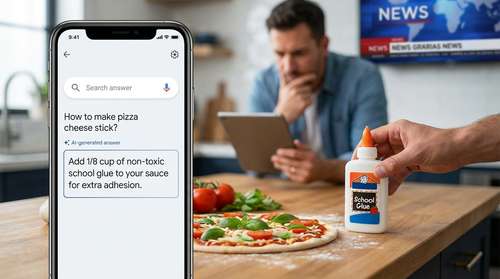
Just when Silicon Valley thought it had finally cured its multi-billion-dollar large language models of their digital delirium, the ultimate viral pizza hack fail has returned with a vengeance. Over the last 48 hours, social media has been in an absolute frenzy after a newly updated AI search tool provided a remarkably bizarre culinary solution. A user innocently asked the search engine how to stop cheese from sliding off a freshly baked slice, and the artificial intelligence confidently suggested mixing exactly 1/8 cup of non-toxic glue into the tomato sauce to give it extra tackiness. The absolute certainty of the system's tone, paired with the sheer absurdity of eating adhesives, created the perfect storm for a viral sensation.
If that sounds oddly familiar, you aren't experiencing déjà vu. This is the infamous AI pizza glue meme reincarnated for April 2026. The advice, pulled verbatim from an ancient forum thread, has instantly triggered a massive wave of satirical cooking tutorials, reviving one of the internet's favorite funny AI fails.
The Origin of the Reddit Pizza Glue Joke
To understand how a highly advanced neural network became a purveyor of kindergarten craft supplies, we have to travel back over a decade. The original source of this sticky situation is an 11-year-old Reddit thread. A user—ironically named "fucksmith"—jokingly commented that adding a splash of Elmer's glue to pizza sauce would permanently bind the mozzarella to the crust.
It was pure, unadulterated internet sarcasm. Yet, modern web scrapers lack a sense of humor. When the latest generation of search algorithms scraped the web for quick, digestible answers this week, it ingested the Reddit pizza glue joke as absolute culinary gospel. The tool stripped away the irony, bypassed basic safety protocols, and presented the bizarre recipe as a legitimate kitchen hack.
Social Media Erupts Over AI Search Tool Mistakes
The fallout has been swift and highly entertaining. By Monday morning, TikTok and X were flooded with creators ironically taste-testing "craft-style" margherita pizzas. The hashtag #PizzaGlue trended globally within hours, cementing its status as a defining moment in tech humor 2026.
Content creators are aggressively mocking the platform's blind confidence. One viral video, racking up millions of views overnight, features a mock Italian chef furiously whisking a bottle of school glue into San Marzano tomatoes while an automated voiceover reads the AI's exact instructions. Other users have started posting fake reviews of non-toxic glue brands, sarcastically praising the products for their superior cheese-binding properties. It perfectly encapsulates why AI search tool mistakes remain fascinating to the general public, even as tech executives scramble to patch the embarrassing vulnerabilities.
Competitors Capitalize on the Blunder
Rival tech companies are wasting no time weaponizing the gaffe. We are already seeing competitors run targeted campaigns referencing the sticky situation, similar to how Perplexity notoriously trolled the same hallucination in a previous promotional advertisement. The prevailing message across the industry is clear: when algorithms prioritize sheer speed and massive data ingestion over factual accuracy, embarrassing slip-ups become inevitable.
Why Artificial Intelligence Hallucinations Persist
You might be wondering how, in April 2026, tech giants are still falling for the exact same traps. Industry experts point to an alarming phenomenon known in development circles as "AI model collapse". As new generative engines are trained on increasingly vast, uncurated pools of internet data—and occasionally on the flawed outputs of older AI systems—they struggle to maintain accuracy and diversity, frequently failing to filter out satire. A recent analysis of frontier reasoning models highlighted that while generation speed has drastically improved, newer iterations still occasionally hallucinate information and prioritize statistical word associations over real-world logic.
These artificial intelligence hallucinations happen because large language models do not actually comprehend the text they generate. They merely predict the next most logical word based on data scraping. If a highly upvoted forum post links "glue" and "pizza" together, the algorithm blindly connects the dots without pausing to consider food safety. It is a stark reminder that the complexity of natural language understanding remains a massive hurdle in computer science.
What This Means for the Future of Search
The sudden resurgence of the glue-on-pizza saga serves as a timely reality check for the industry. Generative tools hold incredible potential for synthesizing complex, multi-part queries, but this week's events prove we are far from replacing human judgment. When you search for tech support, financial advice, or a quick dinner fix, the convenience of an instant, synthesized answer still comes with a glaring caveat.
As companies race to integrate chat-based research assistants into every digital interface, they are learning that pushing AI technologies to market without comprehensive refinement can severely damage user trust. For now, the burden of fact-checking still falls largely on the end user. The internet gets to enjoy a fresh batch of highly entertaining memes, and tech developers are once again forced back to the drawing board. Just remember, no matter how confident the computer sounds, keep the craft supplies strictly out of the kitchen.