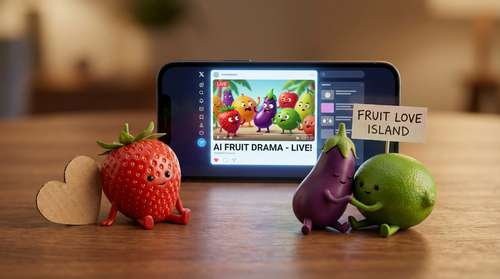
If you have logged onto social media at any point in the last two weeks, chances are you have been subjected to the bizarre, melodramatic lives of anthropomorphic produce. Forget the usual reality TV stars; right now, the most captivating personalities on the internet are a cherry and a banana navigating a toxic relationship. The unapologetically unhinged Fruit Love Island series has taken over our feeds, turning weirdly muscular AI-generated fruits into the ultimate reality stars. What started as a niche joke has rapidly evolved into a full-scale cultural obsession, redefining what it takes to capture the public's attention in 2026.
The Origins of the Strawberry and Eggplant Drama
This isn't just a fleeting gimmick. These digital food items are fighting, gossiping, and betraying each other in a multi-part saga that has viewers genuinely invested. Let's break down exactly how this AI fruit dating drama went from a weird internet experiment to a blockbuster series boasting hundreds of millions of views.
The current fruit fixation traces its roots back to late February 2026, when a creator known as @trombonechef dropped a video that was equal parts tragic and hilarious. It featured a sad, AI-generated strawberry woman who decided to cheat on her devoted strawberry husband. The other man? Her boss, an eggplant.
When the strawberry wife gave birth to a literal eggplant baby, exposing her infidelity to her horrified husband, a new genre of digital storytelling was born. The sheer absurdity of the strawberry and eggplant drama instantly struck a chord, racking up millions of views and inspiring a wave of copycats. People couldn't get enough of these sad stories, proving that the demand for messy, soap-opera-level betrayals knows no bounds—even when the protagonists are usually found in the produce aisle.
Enter 'Fruit Love Island' and the AI cinema012 TikTok Empire
Seeing the appetite for botanical betrayals, the creator behind the AI cinema012 TikTok account decided to up the ante. On March 14, they launched a fully realized, animated parody of the hit summer dating show Love Island. The premise was simple yet incredibly effective: eight single fruits thrown into a villa to flirt, fight, and couple up.
The characters—ranging from the rugged Bananito to the glamorous Strawberrita and the dramatic Orangelo—are fashioned with defined abs, tiny swimsuits, and fruit-inspired skin tones. The account creator actively crowdsources the drama, asking viewers to vote on plotlines and demanding suggestions that specifically involve "backstabbing" and "messiness".
The strategy worked flawlessly. In just over a week, the account amassed more than 3 million followers and nearly 300 million total views. Almost every two-to-four-minute episode pulls in north of 10 million views shortly after posting. It is officially the epicenter of the cheating fruit TikTok trend, completely dominating the algorithm.
Why Is Everyone Watching "AI Slop"?
Critics have been quick to dismiss the trend as "AI slop"—mass-produced, low-quality content designed purely to manipulate social media algorithms. The scripts are repetitive, the voiceovers are notoriously awkward, and the animation has an uncanny, slightly unsettling quality.
Yet, the engagement numbers tell a different story. The audience treats these clips as premium funny relationship memes, actively debating whether Grapenzo was right to confront Orangelo after a secret kiss. The interactivity of voting for couples and watching the immediate fallout mimics the communal viewing experience of actual reality television. It turns out that when you combine familiar reality TV tropes with the sheer unpredictability of AI generation, people will happily watch the chaos unfold.
Celebrity Reactions and Unintended Controversies
You know a trend has reached peak saturation when celebrities and mainstream brands start weighing in. Plastic surgeon and TikTok personality Dr. Miami posted videos rating his favorite contestants from Fruit Love Island, while real-life Love Island USA alumni Kaylor Martin and JaNa Craig filmed themselves reacting to the cartoonish drama.
However, the viral relationship stories 2026 has offered so far aren't without their controversies. The trend sparked a wave of backlash concerning the environmental footprint of generative AI. One viral comment highlighted the irony of wasting massive amounts of server power and clean water just to generate clips of a blueberry cheating on a banana. Swedish pop star Zara Larsson even found herself in hot water when fans criticized her for reposting the funny fruit videos shortly after she publicly condemned the use of generative artificial intelligence.
The Future of Produce Aisle Soap Operas
The format is already mutating and expanding across the globe. South Asian creators have launched localized versions featuring samosas, jalebis, and karelas engaged in equally dramatic domestic disputes. Meanwhile, parodies of the parodies are flooding the app, with users dressing up in banana costumes to confront their "pear" children in live-action skits.
Whether this marks a temporary glitch in the social media matrix or the beginning of a new era of user-directed AI entertainment, one thing is certain. The cheating fruit saga proves that humans don't necessarily need real people to feel invested in a story. We just need high stakes, a little bit of heartbreak, and maybe a coconut named Coconick. For now, you might want to grab some popcorn—because things in the Fruit Love Island villa are only getting messier.