McDonald’s CEO Chris Kempczinski has inadvertently become the main character of the internet this week, and not for the reasons his PR team likely hoped. In a promotional video meant to hype the nationwide launch of the chain’s massive new “Big Arch” burger, the executive’s stiff demeanor, corporate jargon, and comically small bite have sparked a tidal wave of mockery across social media. The most damning verdict? A top comment declaring that the CEO’s “aura screams kale salad.”
The Taste Test That Broke the Internet
The video, originally posted to Kempczinski’s Instagram but exploding in popularity on TikTok and X (formerly Twitter) over the last 48 hours, features the CEO sitting in a pristine, minimalist office. He introduces the Big Arch burger—a 1,020-calorie behemoth featuring two quarter-pound patties, melted white cheddar, and crispy onions—as if unveiling a new software update rather than a lunch item.
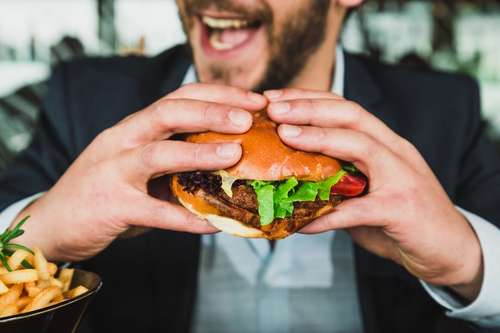
“I love this product. It is so good,” Kempczinski says, holding the burger with a hesitation that viewers immediately latched onto. After admitting he “didn’t even know how to attack it,” he proceeds to take a gingerly, almost microscopic nibble from the edge of the bun. He then turns the barely-touched sandwich toward the camera and exclaims, “That’s a big bite for a Big Arch!”
The disconnect between the messy, gluttonous reality of fast food and the CEO’s sterile, boardroom approach was instant fuel for the meme economy. Within hours of the clip circulating on March 2 and 3, comment sections were flooded with users roasting the executive for looking like he hadn’t touched a carbohydrate since 2004.
“It Scares Me When You Call Food ‘Product’”
While the tiny bite drew laughs, it was Kempczinski’s language that truly alienated the internet. Repeatedly referring to the burger as a “product” rather than “food,” “lunch,” or just “a burger” struck a nerve with customers tired of corporate polish.
“It scares me when you call food ‘product,’” wrote one unsettled Instagram user. Another commenter on X joked, “He looks like he’s handling a radioactive artifact from the dollar menu.” The criticism highlights a growing demand for authenticity from brand leaders—a test Kempczinski seems to have failed by treating the Big Arch like a Q3 earnings asset rather than a delicious meal.
The most viral roasts included:
- “Man’s aura screams kale salad.”
- “That was the smallest first bite I’ve ever seen. He definitely spit that out after the camera cut.”
- “‘I love this product.’ Spoken like a true AI-generated human.”
- “He looks like a kid being forced to eat his vegetables before he can leave the table.”
Burger King Joins the Roast
Never one to miss an opportunity to troll its arch-rival, Burger King immediately seized on the viral moment. On March 3, just as the Big Arch was hitting menus across the U.S., Burger King North America President Tom Curtis posted his own taste test video.
In stark contrast to Kempczinski’s delicate nibble, Curtis filmed himself taking a massive, messy bite of a Whopper, ending the clip with mayonnaise smeared on his face and a simple caption: “Thought we’d replay this.” The shade was subtle but effective, reinforcing the narrative that while McDonald’s is run by “product” managers, Burger King is for people who actually like burgers.
The “Big Arch” Strategy: A Heavy Bet
The viral roasting comes at a critical time for McDonald’s. The Big Arch burger represents the company’s most significant menu innovation in years, designed to compete with “better burger” chains like Five Guys and Shake Shack. Launched nationwide on March 3, 2026, it includes a new tangy sauce and is marketed as the answer to customers complaining that the Big Mac has become too small.
Despite the CEO’s awkward delivery, the controversy has undoubtedly generated massive awareness for the new item. As one marketing expert noted on LinkedIn, “Everyone is making fun of the bite, but everyone also now knows exactly what the Big Arch is and when it launched. Mission accomplished?”
The Corporate Authenticity Trap
The incident serves as a cautionary tale for executives trying to act as influencers. In an era where authenticity is the currency of social media, polished corporate videos often backfire. Kempczinski’s pristine suit, empty desk, and vocabulary (“attack it,” “product,” “units”) created a barrier that no amount of crispy onions could bridge.
Whether the roast hurts sales remains to be seen, but for now, the internet has spoken: The Big Arch might be “big,” but the CEO’s appetite for his own “product” seems exceptionally small.