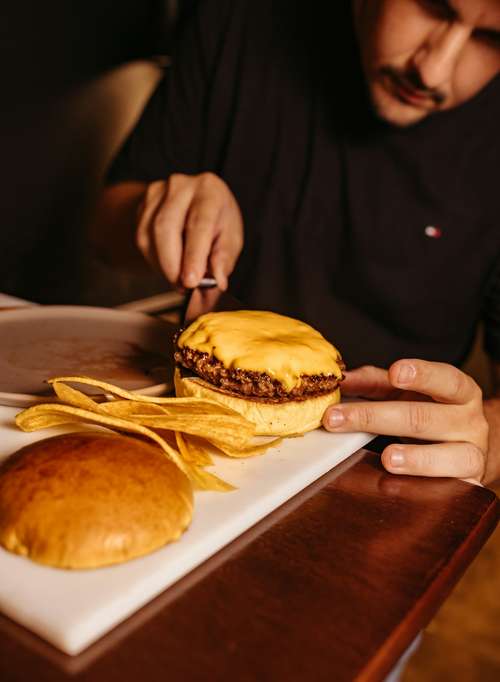
If there is one cardinal rule in food marketing, it is simple: look like you actually enjoy the food. This week, McDonald's CEO Chris Kempczinski broke that rule in spectacular fashion, sparking a viral firestorm that has dubbed him the face of "corporate cringe." As the fast-food giant rolls out its massive new Big Arch burger launch 2026, a promotional video intended to hype the product has instead turned into the internet's favorite meme. In the clip, Kempczinski politely inspects the burger, refers to it repeatedly as a "product," and takes a bite so microscopic that social media users are convinced he’s never touched a hamburger before. As one top comment on X (formerly Twitter) brutalized: "Man's aura screams kale salad."
The 'McNibble' Heard 'Round the World
The controversy centers on a video originally posted to Kempczinski’s Instagram but which exploded in popularity over the weekend of March 2. The clip was meant to celebrate the nationwide debut of the Big Arch, McDonald's first new permanent global burger addition in decades. However, viewers were immediately distracted by the CEO's stiff, almost robotic demeanor.
"I don't even know how to attack it, there's so much to it," Kempczinski says, holding the sesame-and-poppy-seed bun with the delicacy of an archivist handling a rare manuscript. When the moment of truth arrives, he takes a tentative, barely-there nibble—now infamously dubbed the "McDonald's micro-bite meme"—before pulling the burger away to declare it delicious. Critics were quick to pounce, noting that the bite was clean, bloodless, and devoid of the messy joy usually associated with eating a double-patty burger.
"I Love This Product": Corporate Speak That Backfired
Beyond the physical awkwardness, the McDonald's CEO viral video has been torn apart for its dialogue. Instead of calling the burger a "burger," "sandwich," or "meal," Kempczinski repeatedly uses the sterile term "product."
"I love this product. It is so good," he recites, looking into the camera. Later, he adds, "It's a delicious product." The linguistic slip-up fed into the narrative that the executive is disconnected from the actual human experience of fast food. "He talks about it like it's a new software update, not lunch," wrote one TikTok user. Another comment that garnered thousands of likes read, "The gaslighting of 'big bite' is diabolical. He barely broke the crust of the bun." The incident has become a textbook example of corporate cringe, highlighting the widening gap between polished executive suites and the drive-thru reality.
What is the Big Arch Burger? (Launch Details)
Lost in the mockery is the actual item being promoted. The Big Arch burger launch 2026 is a significant move for the Golden Arches. Officially hitting U.S. menus on March 3, the burger is designed to compete with "better burger" rivals. It features two quarter-pound beef patties, three slices of white cheddar, crispy and slivered onions, pickles, lettuce, and the new tangy "Big Arch sauce."
Weighing in at over 1,000 calories, it is indeed a formidable sandwich, which perhaps explains Kempczinski’s hesitation to "attack" it. Early Big Arch product review consensus suggests the burger itself is a hit—messy, flavorful, and substantial. Ironically, the CEO's dainty approach might have been an attempt to avoid the very messiness that customers actually crave. By trying to stay pristine in a suit, he failed to sell the satisfying indulgence of the brand's "biggest and boldest" creation.
Burger King Enters the Chat
Never one to miss a marketing opportunity, rival Burger King wasted no time capitalizing on the blunder. Shortly after the Chris Kempczinski burger tasting went viral, Burger King North America President Tom Curtis posted his own video. In stark contrast, Curtis was filmed tearing into a Whopper with a massive, uninhibited bite, ending the clip with mayonnaise smeared on his face and a genuine grin.
The juxtaposition was lethal. "This is how a human eats a burger," one user commented on the Burger King post. The "Burger Wars" of 2026 have shifted from price points to authenticity battles, with the McDonald's CEO kale salad aura serving as the perfect foil for competitors positioning themselves as "real" food for real people.
The Verdict: Authenticity is the New Special Sauce
While the roast has been brutal, it highlights a crucial lesson for modern brands: authenticity cannot be staged. In an era where CEOs are increasingly expected to be public-facing influencers, the polished, script-heavy style of the past no longer flies. Audiences crave genuine reactions, messiness, and humanity.
Kempczinski will likely survive the news cycle—and the Big Arch will likely sell millions regardless—but the "kale salad" label may stick. For now, the internet has spoken: if you're going to sell a burger, you better look like you know how to eat one.