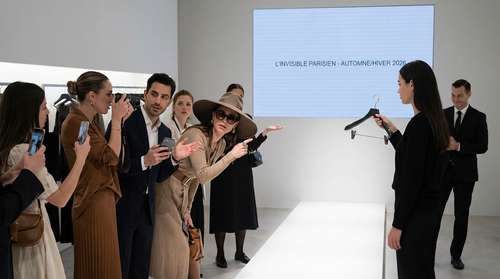
The Emperor truly has no clothes. In what will certainly go down as the defining social media prank 2026 has delivered, a collective of underground Parisian comedians transformed an empty warehouse into the hottest ticket in town. The event? The highly anticipated debut of "Invisibilité Couture." The catch? The brand does not exist, and the clothes are literally made of thin air. The resulting footage of the Invisible Fashion Show prank has shattered the illusion of exclusivity in the fashion world, racking up a staggering 50 million views in just 24 hours.
The Ultimate Paris Fashion Week Satire
To execute the perfect sting operation, the pranksters knew they had to nail the aesthetics of luxury. They secured a raw, industrial venue on the outskirts of the Marais district, a staple location for edgy fashion debuts. Stern-looking public relations representatives armed with clipboards guarded the door, turning away everyday pedestrians while ushering in VIP guests. The masterminds distributed cryptic, embossed invitations to top-tier digital creators, claiming the designer utilized hyper-translucent, micro-woven smart fabrics that were supposedly perceptible only to those with an elevated aesthetic palate.
The meticulous attention to detail is what made the sting so successful. The pranksters went as far as creating a sleek, minimalist website for Invisibilité Couture, complete with password-protected lookbooks that displayed blank pages and artist statements filled with meaningless fashion jargon. By weaponizing the industry's own language against it, the comedians created a trap that was almost impossible for status-obsessed attendees to resist. They perfectly manipulated the FOMO that drives the influencer economy. The sheer ease with which these influencers tricked Paris tastemakers into believing they were viewing the pinnacle of avant-garde design is nothing short of breathtaking. Once inside, guests were treated to an empty runway, ambient techno music, and strategic lighting pointing at absolutely nothing. Yet, rather than question the empty room, attendees immediately began capturing content, desperate to prove they were part of the exclusive moment. This brilliant piece of Paris fashion week satire highlights a growing fatigue with the hyper-pretentious nature of modern runway shows.
Praising the "Texture and Flow" of Nothing
If you are looking for the absolute peak of LOL news March 2026 has produced, the reaction interviews from the fake event deliver it in spades. The viral video compilation features dozens of prominent style bloggers deadpanning their reviews of the non-existent garments. One prominent content creator, standing in front of a completely blank white wall, gestured enthusiastically at empty space. "The texture and flow of the garments are just completely groundbreaking," she gushed to a hidden camera. "It challenges the very concept of materiality." Another influencer, carefully holding a branded wooden hanger carrying nothing but thin air, confidently declared the invisible collection to be a masterclass in minimalist draping.
The comedy of errors didn't stop at verbal reviews. The hidden cameras captured attendees posing for elaborate photo shoots with the invisible items. Photographers barked directions as models dramatically interacted with non-existent hemlines and imaginary oversized collars. Some guests even pretended to try on the phantom accessories, adjusting invisible sunglasses and securing invisible luxury handbags over their shoulders. The sheer dedication to maintaining the charade, even when faced with empirical nothingness, elevates this from a simple joke to a profound piece of performance art. It ranks instantly among the most funny influencer fails of the digital age, exposing how the pressure to generate relentless content often overrides basic common sense.
Echoes of the Infamous Palessi Stunt
For fashion industry veterans, the fake designer brand viral sensation feels like a spiritual successor to one of the most famous marketing stunts of the last decade. Back in late 2018, the discount footwear retailer Payless ShoeSource executed an incredibly similar social experiment. They created a fictitious luxury label called "Palessi," complete with an upscale boutique in Los Angeles, and invited fashion influencers to a glamorous launch party. Attendees were filmed praising the elegance of $20 shoes, happily offering to pay upward of $600 for them. The Payless experiment definitively proved that consumer perception of luxury is often just an illusion manufactured by strategic marketing and peer pressure.
The parallels are striking, but the evolution of the joke is telling. While the Palessi stunt tricked people into overvaluing cheap physical goods, the 2026 invisible stunt tricked them into valuing literally nothing. It highlights how the digital landscape has shifted over the past eight years. In 2018, influencers still needed a physical object to justify their attendance and content. Today, the mere suggestion of proximity to a luxury brand is enough to generate millions of impressions. By stripping away even the physical product entirely, the organizers of the invisible runway pushed the Palessi concept to its absolute, absurd limit. They proved that in the modern digital economy, the physical product is secondary to the exclusivity of the event itself.
Why This Fake Designer Brand Went Viral
The speed at which the footage exploded online speaks volumes about the current state of digital media. Hitting 50 million views in a single day requires more than just a funny premise; it requires a cultural nerve to be struck. Audiences are increasingly skeptical of the ultra-curated, heavily sponsored realities presented by social media personalities. Watching supposed experts earnestly analyze the craftsmanship of invisible clothing provides a massive dose of catharsis for everyday consumers who feel priced out of luxury fashion. The Invisible Fashion Show prank effectively democratized the joke, inviting the entire internet to laugh at the emperor's new clothes.
There is a broader lesson here for brands and marketers. Authenticity remains the most valuable currency on the internet, and when that authenticity is exposed as hollow, the backlash is swift and severe. The creators who fell for the prank are now scrambling to do damage control, with some leaning into the joke and others quietly deleting their breathless reviews of the imaginary garments. Moving forward, content creators will likely have to be far more discerning about the events they attend and the products they endorse. Until then, we can all enjoy the spectacular hilarity of influencers posing with the finest, most breathable invisible couture ever created.