When you think of high-level statecraft, impromptu aerobics rarely come to mind. Yet on April 13, 2026, the global internet was treated to precisely that. After days of relentless and increasingly bizarre speculation regarding his physical condition, an evidently exasperated Philippine leader decided words were no longer enough. The resulting spectacle—Ferdinand Marcos Jr jumping jacks in full corporate attire—has immediately cemented its place in the pantheon of weird world news today. Rather than issuing a standard press release to combat the swirling Philippines President health rumors, the 68-year-old chief executive transformed the driveway of his Manila office into a makeshift gym. The bizarre display served as the ultimate proof of life, definitively silencing critics while simultaneously creating an instantly iconic viral moment.
The Sweaty Suit: An Unconventional Proof of Life
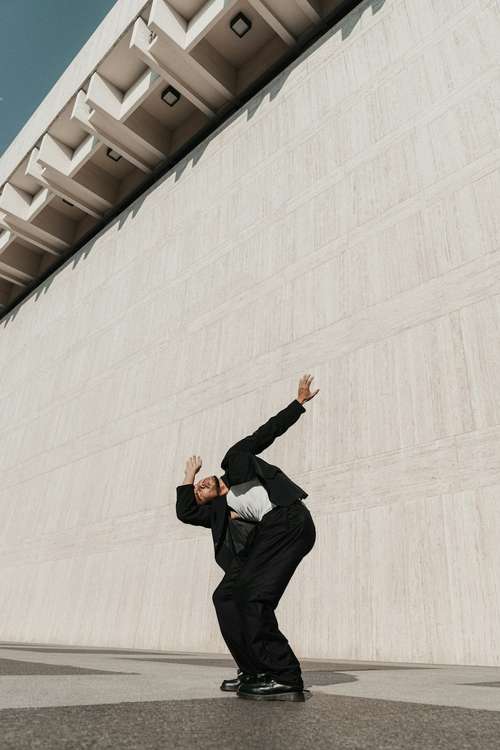
Picture the scene outside the Malacañang Palace. Journalists gathered for what they assumed would be a routine briefing regarding pressing national matters. Instead, they witnessed a highly unusual display of physical fitness. Dressed impeccably in formal office wear—complete with leather shoes and reading glasses—the 68-year-old leader broke into a vigorous set of exercises. He executed several jumping jacks followed by a brief jog, a visual that quickly turned the President Marcos jumping jacks video into a global sensation.
"I challenge anyone who are saying that I am sick, that they come and exercise with me," a visibly annoyed Marcos Jr. told the stunned press corps. Refusing to mince words, he escalated the challenge. "You come to the gym with me. Let's see who can lift the weights better."
The sheer absurdity of a head of state threatening critics with a weightlifting competition immediately elevated the incident beyond local politics. It was a classic example of viral political stunts designed to overwhelm a negative news cycle with an undeniable, if slightly comical, visual reality. For observers compiling odd news April 2026, this spontaneous workout session instantly took the top spot.
Anatomy of a Digital Disinformation Campaign
To understand why a sitting president felt compelled to perform calisthenics in dress shoes, you have to look at the darker side of social media. In the weeks leading up to the unexpected workout, an aggressive wave of digital disinformation had blanketed the Philippines. Anonymous accounts and political agitators circulated wild theories, claiming the president was secretly paralyzed or even dead.
"Those people who tell you that I'm sick, that I'm paralyzed, they're all liars," Marcos stated emphatically after catching his breath.
These rumors didn't materialize entirely out of thin air. Earlier in the year, Marcos had vanished briefly from the public eye, later admitting via video message that he had been hospitalized for an abdominal ailment. The official diagnosis was diverticulitis—a painful inflammation of pouches in the digestive tract. While his medical team confirmed he had fully recovered months ago, the initial secrecy provided fertile ground for conspiracy theorists. The administration even noted a "sudden and coordinated surge" in online disinformation targeting the president's health, forcing the chief executive to take matters into his own hands—and feet.
Domestic Turmoil and Global Crises
The timing of these Philippines President health rumors could not have been worse for the administration. Marcos Jr. explicitly mentioned that he wanted to dispel the panic because his citizens are already overwhelmed by entirely real anxieties. From the devastating economic fallout caused by the ongoing war in the Middle East to domestic catastrophes like recent earthquakes, the public plate is already overflowing.
Adding to the pressure cooker is a fractured domestic political landscape. Marcos is currently navigating a deeply contentious rivalry with his own Vice President, Sara Duterte, who is facing ongoing impeachment hearings in Congress. In such a volatile environment, projecting weakness or physical frailty is a massive political liability.
Despite the comedic nature of his response, Marcos was notably transparent about his actual health profile. He openly admitted that he continues to take daily maintenance medication for both gout and high blood pressure. By owning these common, age-appropriate medical conditions, he effectively stripped the weaponized health conspiracies of their power, leaning on authenticity rather than projecting an image of superhuman invulnerability.
A Long History of Bizarre Denials
While the Manila workout might be the most entertaining recent example, world leader death hoaxes are practically a political tradition. Throughout history, authoritarian regimes and democratic administrations alike have had to invent creative ways to prove their leaders were still breathing. From staging highly choreographed hunting trips to releasing awkwardly dated photographs holding the morning newspaper, the "proof of life" genre is well established.
Yet, there is something distinctly modern about the way this particular incident unfolded. In an era where deepfakes and AI-generated text can conjure a political crisis in minutes, perhaps the only effective countermeasure is a live, unscripted display of undeniable humanity. A stiff, prepared speech can be picked apart by skeptics. A 68-year-old man sweating in his leather shoes while attempting aerobic exercise is almost impossible to fake.
Ultimately, the spectacle achieved its primary goal. The whispers of severe illness have been entirely drowned out by the sound of leather hitting the pavement. As the dust settles on this peculiar chapter of statecraft, the incident stands as a masterclass in modern crisis management—proving that sometimes, the best way to handle a sophisticated digital rumor is with a few old-fashioned jumping jacks.