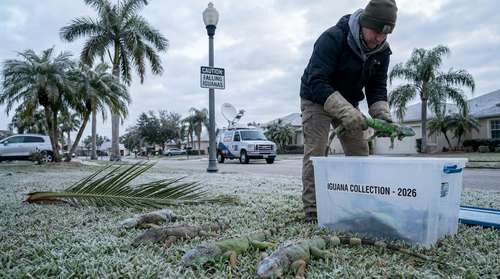
If you thought your week was weird, imagine walking out to your driveway to find it littered with frozen, comatose reptiles. Welcome to the Lizard Blizzard of 2026. As a historic arctic blast gripped the Sunshine State this week, sending temperatures plummeting into the 30s, Floridians faced a hazard unique to their latitude: heavy rain, wind, and the thud of cold-stunned green iguanas dropping from the canopy. In a move that turned suburban lawns into harvest grounds, state wildlife officials declared a temporary "open season" on the invasive pests, encouraging residents to bag up the lizard popsicles and haul them in.
The Great Iguana Roundup of '26
The phenomenon of "raining iguanas" is a known quirk of Florida winters, but this week's event was one for the history books. With temperatures in South Florida dipping to their lowest levels since 2010, the Florida Fish and Wildlife Conservation Commission (FWC) issued Executive Order 26-03. This rare directive waived the usual permit requirements for transporting prohibited species, effectively deputizing the public to clear the streets of the dormant dragons.
Between February 1 and 2, residents were cleared to collect the immobilized reptiles and deliver them to five designated drop-off sites across the state. The response was overwhelming. According to FWC data released Wednesday, a staggering 5,195 iguanas were turned in during the 48-hour window. The epicenter of the action was the Sunrise field office in West Broward, which received 3,882 of the creatures alone.
Why Are It Raining Reptiles?
To the uninitiated, a sidewalk covered in rigid lizards looks like a reptile apocalypse. But these green iguanas aren't dead—they're just hitting the snooze button. As cold-blooded animals native to Central and South America, they rely on ambient heat to function. When the mercury drops below 45 degrees Fahrenheit, their bodies enter a state of torpor. They lose muscle control, their metabolism slows to a crawl, and if they happen to be roosting in a palm tree, gravity takes over.
While in this catatonic state, the iguanas are completely defenseless, making them easy pickings for professional trappers and frustrated homeowners alike. Blake Wilkins, owner of Red Line Iguana Removal, described the scene as chaotic. "The sheer numbers were surprising," Wilkins told reporters, noting that his team collected nearly 3,000 iguanas in just two days. "At one golf course alone in Pembroke Pines, we found more than 100."
Don't Warm Up the Zombies
Amid the frenzy of the collection drive, officials issued a crucial warning: do not bring the lizard popsicles inside your house. It might be tempting to play Good Samaritan to a frozen creature, but a thawed iguana is a dangerous iguana.
The "Lazarus Lizard" Effect
There is nothing quite like the panic of a 5-foot lizard suddenly waking up on your passenger seat or, worse, your living room floor. As they warm up, iguanas recover from their temporary paralysis faster than you'd expect. A defenseless popsicle can transform into a thrashing, tail-whipping frenzy in minutes. The FWC explicitly advised collectors to keep the reptiles in sealed, breathable bags and transport them in locked containers—preferably in the bed of a truck—to avoid a mid-commute disaster.
A Win for Native Wildlife
While the image of Floridians piling frozen lizards into pickup trucks is objectively funny, the environmental stakes are serious. Green iguanas are a destructive invasive species with a voracious appetite for native plants and a habit of burrowing into seawalls and sidewalks, causing millions in infrastructure damage. They have no natural predators in Florida to keep their population in check.
This week's cold snap provided a rare assist from Mother Nature. Roger Young, Executive Director of the FWC, praised the "coordinated efforts" of residents and staff. "The removal of over 5,000 of these non-native lizards in such a short time span was only possible thanks to the many residents that took the time to collect and turn in cold-stunned iguanas," Young stated.
As temperatures climb back into the 70s this weekend, the surviving iguanas are shaking off the frost and climbing back into the trees. But for a few freezing days in February 2026, Florida fought back against the invasion—one frozen lizard at a time.