
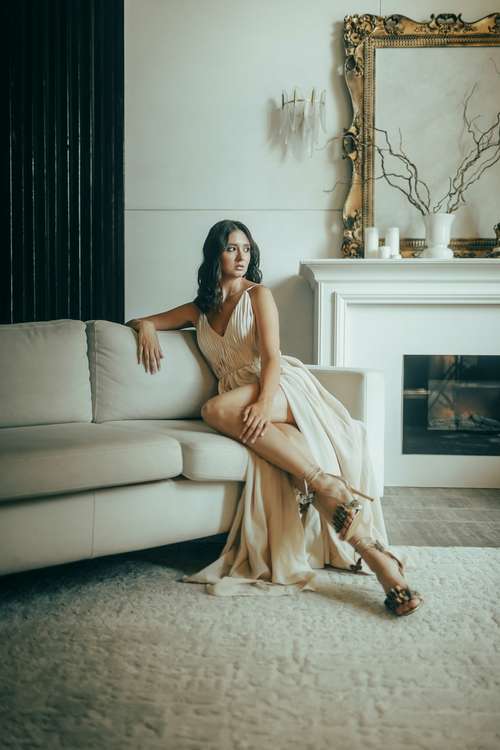
If you have scrolled through TikTok at all over the last few years, you have likely encountered Nara Smith. Often clad in a designer gown, speaking in hushed, soothing tones, the 24-year-old creator is famous for making complex foods entirely from scratch. From homemade Oreo dupes to DIY bubblegum and Coca-Cola, her content is wildly popular,. Yet, despite her soaring follower count, Smith frequently finds herself at the center of the Nara Smith tradwife debate,. Is she romanticizing a bygone era of domestic submission, or simply cashing in on a highly aesthetic hobby? The influencer finally set the record straight during a highly publicized Nara Smith Vanity Fair interview this week. Rejecting the conservative tag, she emphatically described her life as anything but traditional.
The Nara Smith Vanity Fair Interview: Setting the Record Straight
Rumors and critical think pieces have relentlessly grouped Smith with a rising internet subculture that glorifies traditional gender roles. The "tradwife" movement typically promotes women staying out of the workforce to submit to their husbands as sole providers. However, Smith firmly distances herself from the ideology.
"I've never quite understood where that title comes from because I don't know what is traditional about our life," she explained,. She pointed to the reality of the Lucky Blue Smith marriage to clarify her stance. As the wife of the famous supermodel, Smith runs a massive digital business, commanding an audience of over 12 million on TikTok alone.
"I am a full-time working mom. I work; so does Lucky. It's a modern relationship," she stated. This candid look into her dynamic strikes at the core of the modern relationship vs tradwife discourse. Her partnership is egalitarian, where both spouses contribute to their household and respective careers, a sharp contrast to the financial dependence often preached by true traditionalist creators.
Cooking as a Choice: Exploring Relationship Love Languages
Why the elaborate, from-scratch meals if she isn't promoting a 1950s housewife ideology? For Smith, the kitchen is where her passions align. She views her culinary creations as one of her core relationship love languages rather than a mandated domestic duty,.
"I think it might've been because I love cooking, but cooking is my love language," she clarified. "It's a hobby of mine and it's my job. It's not something that I'm condemned to do."
In the broader context of viral relationship trends, the internet often struggles to separate personal passion from political messaging. Smith initially developed her elaborate cooking habits to address severe eczema she suffered from after her second pregnancy. By cutting out processed foods, she found physical relief and inadvertently stumbled into a massive audience hungry for her calming aesthetic. Preparing a complex meal from scratch is an act of care—an offering to her family that doubles as the foundation for a lucrative career.
Changing Gender Roles in Marriage 2026
The tension surrounding Smith's content highlights how audiences interpret gender roles in marriage 2026. Social media thrives on categorization, and watching a young mother of four cook elaborate meals in a ballgown easily triggers assumptions about her politics. But Smith approaches her videos as a form of performance art rather than a lifestyle mandate.
When Vanity Fair asked if "playing dress up" was a more accurate description of her aesthetic than "tradwife," she agreed enthusiastically. "I feel like I play a character and I get to be whatever I want to be for the day," she shared. Wearing an elegant dress while baking bread is a deliberate creative choice, allowing her to curate an aspirational fantasy.
The Power of Theatricality
Smith noted that her wardrobe serves a dual purpose. Sometimes she wears high fashion in the kitchen simply because she has nowhere else to wear it, adding that if throwing on a princess gown makes her young daughter smile, she considers it a win. This conscious theatricality separates her from creators who push domesticity as a strict moral imperative for women.
Beyond the Aesthetic: Building a Culinary Empire
Some critics argue that profiting from the appearance of a traditional housewife while operating as a primary breadwinner is an ironic contradiction. Outlets have pointed out the dissonance between her hyper-domestic visuals and her status as a highly paid influencer. However, Smith is transparent about her ambitions. She just announced her debut cookbook, bringing her viral recipes to home kitchens, and she has made it clear that she is actively building a "culinary lifestyle empire".
We are witnessing a cultural shift where women refuse to let observers dictate their identities based on their hobbies. Choosing to stay home, cook, or wear beautiful clothes does not automatically negate an individual's financial independence or subscribe them to rigid, archaic standards. By actively dismantling the assumptions placed upon her, Smith forces audiences to examine why society rushes to label women who enjoy domestic arts. Her success proves that building a massive business around homemaking can, paradoxically, be an incredibly modern pursuit.