
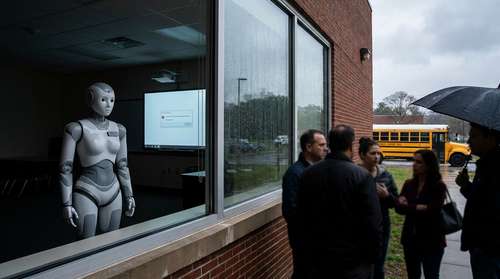
The plan to bring a silicone-skinned, $57,000 artificial intelligence helper into an upstate classroom has hit a massive roadblock. Following an intense New York robot teacher backlash, the Salamanca City Central School District has officially paused its pilot program. Officials originally envisioned Sally the AI robot as an innovative STEM tutoring tool for high schoolers. However, the project sparked outrage when community members and state officials learned of the manufacturer's corporate ties to a prominent adult novelty company, triggering a fierce sex doll robot teacher controversy.
The district, located on the Seneca Nation reservation in Western New York, intended to be a pioneer. It partnered with tech firm Realbotix to deploy the seated humanoid to assist students in specialized technology courses. Yet, pushback from the state’s education department and the local teachers' union forced administrators to put the brakes on a sci-fi scenario that many felt was wildly inappropriate for a public school setting.
A $57,000 Silicone Tutor: Who is 'Sally the AI Robot'?
Before the plug was pulled, the Salamanca Central School District Sally initiative was slated to become the first of its kind in an American public education setting. The district spent roughly $57,590 on the Realbotix school robot, customizing her appearance down to thin eyebrows, smooth silicone skin, and long brown hair. While she doesn’t walk the halls like a sci-fi cyborg, Sally features a highly lifelike face and moving upper torso, designed to provide a physical, engaging presence alongside her digital brain.
Administrators championed the device as a revolutionary AI teaching assistant Salamanca NY students could use to master complex subjects like Arduino board programming. Powered by an advanced artificial intelligence network, Sally was designed to remember previous conversations with specific students, offering a personalized tutoring experience. Furthermore, the package included a 24/7 digital avatar extension that kids could access from their home laptops for homework help. The stated goal was to boost engagement in STEM fields for an underserved rural population.
The Sex Doll Robot Teacher Controversy Explained
The futuristic dream quickly morphed into a public relations nightmare. The core of the New York robot teacher backlash stems from the corporate origins of Realbotix. The holding company shares an ownership umbrella with Abyss Creations, the manufacturer of the hyper-realistic RealDoll line of adult sex dolls.
Once this connection surfaced, parents and community members voiced immediate disgust. The realization that a device sharing corporate DNA with adult novelty products would interact directly with 11th and 12th graders ignited the sex doll robot teacher controversy. Indigenous residents in the community also criticized the rollout as culturally tone-deaf, questioning why a district where nearly a third of students identify as Native American was being used as a testing ground for an expensive, experimental machine instead of investing those critical funds into human educators.
Realbotix executives frantically tried to distance their commercial offerings from their controversial sister brand. Representatives insisted that their commercial AI division operates entirely independently from the adult entertainment branch, claiming that Sally’s hardware shares no blueprints with their adult models. But for many parents, the visual similarities—including the stylized silicone features—were impossible to ignore.
Educators and State Officials Speak Out Against the Humanoid Robot Classroom New York Pilot
Teachers were among the first to draw a hard line against introducing a humanoid robot classroom New York pilot program. Melinda Person, president of the New York State United Teachers labor union, issued a scathing rebuke. She stated unequivocally that a robot built by an enterprise associated with sex dolls has absolutely no place near teenagers. Educators expressed deep concern that deploying human-like machines dehumanizes the teaching profession, replaces authentic mentorship, and creates dangerous precedents for student privacy.
The grassroots outcry eventually reached Albany. Late last week, New York State Education Commissioner Betty A. Rosa intervened directly, sending a formal letter to Salamanca Superintendent Mark Beehler. Rosa warned that the education department held serious reservations about the emotional and psychological effects of putting a lifelike robot in front of adolescents. Her intervention highlighted severe concerns about data security, considering the AI system would need to process, remember, and analyze sensitive student interaction data to function properly.
Salamanca Central School District Hits Pause on the Machine
Faced with mounting pressure from the state capitol, a furious labor union, and concerned taxpayers, the district officially halted the initiative on July 24, 2026. Salamanca officials announced via a public Facebook post that the pilot project is indefinitely suspended while they sort through enhanced student data privacy agreements with state regulators and facilitate better communication with stakeholders.
Superintendent Beehler previously defended the purchase by stating it would give rural students vital firsthand exposure to emerging workforce technologies. Now, the district must engage in extensive damage control. As algorithms and automation continue to disrupt modern classrooms, this high-profile New York robot teacher backlash serves as a vital cautionary tale. Schools rushing to embrace the latest tech trends are learning the hard way that true educational innovation cannot bypass community standards, transparency, and basic data security.