
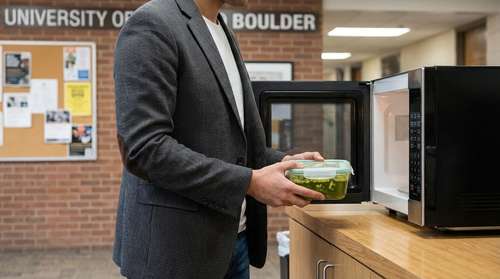
A seemingly routine lunch break at the University of Colorado Boulder has culminated in a staggering $200,000 legal settlement, resolving a contentious civil rights battle that began over the smell of microwaveable Indian food. The dispute, which critics and the plaintiffs have labeled a clear case of "food racism," centers on doctoral student Aditya Prakash and his partner Urmi Bhattacheryya, who alleged their academic careers were dismantled after a staff member complained that Prakash’s palak paneer was too "pungent" for the office kitchen. While the university has denied any liability, the six-figure payout and the subsequent viral attention have ignited a fierce debate about cultural intolerance in shared workspaces.
The Microwave Incident That Started It All
The conflict traces back to September 2023, inside the anthropology department of the University of Colorado Boulder. Aditya Prakash, a Ph.D. candidate at the time, was heating a homemade dish of palak paneer—a popular North Indian curry made with spinach and cottage cheese—in a communal microwave. According to the federal lawsuit filed by the couple, a university staff member interrupted him, remarking, "Oof, that's pungent," and demanded he stop heating the meal immediately.
The situation escalated when Prakash reportedly tried to explain that it was simply lunch. He alleged that he was told there was an unwritten rule against heating "strong-smelling" foods. When he pressed for clarification on what constituted a violation, the staff member allegedly drew a stark cultural line: "sandwiches" were acceptable, but "curry" was not. This distinction became the crux of the couple's food racism controversy allegations, suggesting that the complaint wasn't about odor intensity, but rather a bias against non-Western cuisine.
Escalation and Academic Retaliation
What should have been a minor interpersonal friction reportedly spiraled into a campaign of institutional retaliation. Following the incident, Prakash and his partner, Urmi Bhattacheryya—also a doctoral student in the same department—claimed they faced severe professional backlash. They alleged that after pushing back against the "pungent" comments, they were stripped of their teaching assistant positions, lost their research funding, and were abandoned by their academic advisors.
The couple described the environment as increasingly hostile, transforming their academic haven into a place of anxiety. In their lawsuit, they argued that the university failed to protect them from discrimination and instead punished them for speaking out. The term food racism has been widely used by their supporters to describe the policing of ethnic foods in professional spaces, a microaggression that marks minority cultures as "offensive" or "out of place."
Details of the $200,000 Palak Paneer Settlement
After a protracted legal struggle, the University of Colorado Boulder lawsuit reached a quiet conclusion that has only recently surged into the headlines. As part of the agreement, the university agreed to pay the couple a total of $200,000. Additionally, both Prakash and Bhattacheryya were awarded their Master's degrees, a credential that had reportedly been withheld during the dispute.
However, the victory came with strings attached. The settlement terms reportedly include a permanent ban preventing the couple from ever seeking employment or enrollment at the university again. While the university released a statement asserting they "adhered to established, robust processes" and settled solely to avoid the costs of litigation, the payout is being viewed by many as a tacit admission that the situation was mishandled. The Aditya Prakash settlement has since gone viral, viewed millions of times on social media platforms where users are debating the ethics of "office smell" policies.
Weird Local News 2026: A Global Conversation
This story has transcended local reporting to become a prime example of weird local news 2026, highlighting how quickly hyper-local disputes can become global cultural flashpoints. The incident resonates with many immigrants and workers from diverse backgrounds who have felt self-conscious about bringing traditional meals to work. The "lunchbox anxiety" phenomenon is well-documented, but rarely does it result in a federal lawsuit and a massive financial settlement.
Social media commentary has been divided. Some users argue that shared spaces require a "neutral smell" etiquette, while others vehemently defend the couple, pointing out that "strong smells" is a subjective metric often weaponized against Asian and African cuisines. The microwave food dispute at CU Boulder serves as a costly reminder to institutions that policing cultural expression—even in the breakroom—can have serious legal and financial consequences.
The Aftermath for the Students
Despite the financial vindication, the toll on Prakash and Bhattacheryya has been significant. Reports indicate that both scholars have since left the United States and returned to India, their academic trajectories in the U.S. effectively cut short. The experience of fighting an expensive office smells dispute derailed their Ph.D. aspirations at the institution, changing the course of their lives.
This case sets a potential precedent for how universities and corporations handle complaints about cultural differences in the workplace. It underscores the need for clear, objective policies that do not unfairly target specific demographics. As the story continues to trend, it challenges us to rethink what we consider "professional" and who gets to decide the standards of a shared environment.