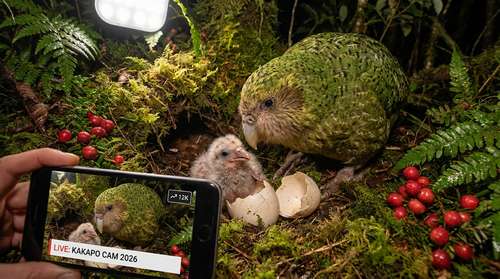
It smells like musky papaya, waddles like a confused toddler, and has been described by biologists as “too delicious” to survive in the wild. Yet, the kakapo—New Zealand’s critically endangered flightless parrot—is currently the internet’s unlikeliest superstar. This week, a rare, berry-fueled “mating frenzy” peaked with a viral livestream that has millions glued to their screens, watching the clumsy arrival of the 2026 breeding season’s newest miracle: a fluff-ball chick hatched under the watchful eye of a global audience.
The Livestream That Stopped the Internet
For the past few days, productivity has plummeted across the globe as fans tune into the Department of Conservation’s “Royal Cam.” The star of the show is Rakiura, a female kakapo nesting on the predator-free sanctuary of Whenua Hou (Codfish Island). Unlike the high-speed chases of typical nature documentaries, this viral sensation is a masterclass in slow TV. Viewers are entranced by the green, moss-like bird simply breathing, occasionally shuffling, and emitting low grunts.
The excitement reached a fever pitch late yesterday when Rakiura’s eggs began to crack. Social media exploded with screenshots and breathless updates as the first clumsy, white-fluffed chick of her clutch emerged. This event marks a pivotal moment in what conservationists are calling a “mega-mast” year—a rare alignment of nature that has triggered the biggest kakapo baby boom in recent history.
Why the World is Obsessed
Part of the appeal lies in the bird’s sheer absurdity. Often voted the world’s weirdest bird, the kakapo breaks every rule of being a parrot. It’s nocturnal, flightless, and heavy—weighing up to 9 pounds. But it’s the bird’s personality that captures hearts. They are famously friendly but hopelessly clumsy, often attempting to fly from trees only to crash-land with a thud.
Then there’s the smell. Biologists working on the recovery islands report that the birds emit a strong, pleasant odor resembling honey, freesia, or fruit salad. Unfortunately, this sweet scent, combined with their inability to fly, is exactly what made them “too delicious” and easy targets for introduced predators like stoats and rats, driving them to near-extinction.
A Berry-Fueled 'Mating Frenzy'
The current viral moment isn’t just random luck; it’s the result of a specific botanical event known as a “mast year.” Kakapo are notoriously fussy breeders, only mating when the native rimu trees produce a bumper crop of fruit. This super-abundance of berries provides the Vitamin D and calcium necessary to raise healthy chicks.
In 2026, the rimu trees have delivered a historic harvest, kicking off a breeding season that experts haven't seen in four years. Male kakapo, who build bowl-like arenas to amplify their booming calls, have been in a frenzy, sending deep, subsonic vibrations across the islands to attract females. This biological urgency has transformed the quiet forests into a bustling singles bar for parrots, resulting in a record number of fertile eggs.
Conservation in the Spotlight
While the memes and viral clips are entertaining, the stakes are incredibly high. With a total population hovering around 250 birds, every single chick is a lifeline for the species. The hatching of chicks like the one in Rakiura’s nest is a delicate operation. Rangers monitor the nests 24/7, ready to intervene with smart eggs (high-tech dummies that monitor incubation data) or hand-rearing if a mother struggles.
Deidre Vercoe, operations manager for the Kakapo Recovery Programme, noted that the public's fascination is a massive win for conservation. "When people fall in love with individual birds like Rakiura, they begin to care about the ecosystem that sustains them," she said. The influx of donations and attention during this 2026 season could fund crucial research into genetic diversity and disease prevention.
The Underdog We Need Right Now
In a news cycle often dominated by gloom, the story of a fat, sweet-smelling parrot trying its best to reproduce against the odds resonates deeply. The kakapo is a survivor, clawing its way back from the brink with a little help from science and a lot of rimu berries.
As the newest chick settles into the nest, fed by regurgitated fruit and watched by millions, it represents more than just a biological success. It’s a testament to the weird, wonderful resilience of nature. For now, the world continues to watch, wait, and root for the flightless bird that forgot how to be a bird, but mastered the art of stealing hearts.