In the high-stakes world of global manufacturing, precision is usually everything. But for one factory in Yiwu, China, a simple sewing mistake has inadvertently birthed the first viral sensation of 2026. Meet the Crying Horse toy, a red plush equine that was supposed to be a cheerful mascot for the upcoming Year of the Horse 2026. Instead of a festive grin, a production line error left thousands of these dolls with their mouths sewn upside down, resulting in a permanently devastated expression. What should have been a recall nightmare has instead become an internet phenomenon, with the viral sad horse plush resonating deeply with burned-out office workers across the globe.
The Happy Accident: Anatomy of a Viral Factory Fail
The story began at the "Happy Sister" shop in Yiwu International Trade City, the world's largest wholesale market. Shop owner Zhang Huoqing had commissioned a standard run of festive red horse dolls to capitalize on the upcoming Lunar New Year rush. The design brief was simple: a lucky red coat, a golden bell, and a happy smile to welcome prosperity.
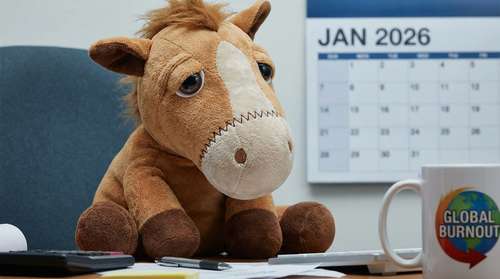
However, during the rush to meet early deadlines, a worker on the assembly line accidentally stitched the mouth of the prototype upside down. The result was a horse that looked less like it was welcoming a new year of fortune and more like it had just been denied a holiday bonus. To make matters worse—or better, as it turns out—the horse’s nostrils were positioned in a way that looked like falling tears.
“I initially offered a refund to the first customer who pointed it out,” Zhang told local reporters. “I thought it was a disaster. But then I saw photos of it circulating online, and people weren't mocking it—they were bonding with it.”
Why the ‘Crying Horse’ Resonates with the 996 Work Culture
The Crying Horse toy didn't just go viral because it was one of those funny manufacturing fails; it went viral because it struck an emotional chord. In China, where the grueling 996 work culture meme (working 9 am to 9 pm, 6 days a week) remains a potent symbol of burnout, the miserable horse became an instant mascot for the exhausted workforce.
Social media platforms like Weibo and TikTok were flooded with images of the doll sitting on office desks, surrounded by stacks of paperwork. The hashtag #YiwuCryCry-HorseGoneViral quickly amassed over 100 million views. Users captioned photos with phrases like, "This horse is me when the meeting could have been an email," and "The smiling horse is how I look at 6 PM on Friday; the crying horse is me at 9 AM on Monday."
The Rise of ‘Ugly-Cute’ Trends
This phenomenon fits perfectly into the growing "ugly-cute" aesthetic that has dominated Gen Z consumer trends. Much like the popular "Labubu" monsters or the ugly green flying horse of Gansu from a few years prior, the viral sad horse plush rejects the polished perfection of traditional mascots. It embraces imperfection, making it feel more authentic to a generation tired of curated happiness. It validates negative emotions in a playful way, offering a soft, plush vessel for collective workplace anxiety.
From Factory Reject to Global Bestseller
The commercial impact of this blunder has been staggering. Instead of correcting the mistake, Zhang Huoqing ordered her factory to keep the error. "These days, almost everyone who walks through the door asks for the Crying Horse," noted Lou Zhenxian, a veteran vendor in the market. The factory is now producing over 15,000 units a day and has opened ten additional production lines just to keep up with demand.
International orders are pouring in as well. What started as a local joke has crossed borders, with orders arriving from the United States, South Africa, and Europe. The universal feeling of being overworked and under-caffeinated translates across all languages, making the Crying Horse toy a global ambassador for relatable office memes.
What This Means for the Year of the Horse 2026
As we approach the Year of the Horse 2026, this trend signals a shift in how we celebrate holidays. Traditional symbolism focuses on luck, strength, and boundless energy. The Crying Horse, however, offers a more grounded, humorous take on reality. It suggests that it’s okay not to be energetic all the time—that sometimes, you just need to frown and push through.
Marketing experts believe this accidental mascot might actually outsell the traditional "happy" versions this season. It has transformed from a piece of décor into a statement piece—a way for people to say, "I'm trying my best," without saying a word. In a world of filtered perfection, the Crying Horse is the honest, miserable friend we didn't know we needed.
So, if you spot a red horse with a downturned mouth on your colleague's desk this February, don't ask them if they are okay. Just know that they, too, are riding the wave of trending bizarre news and finding comfort in the most unlikely of places: a factory mistake that became a global mood.