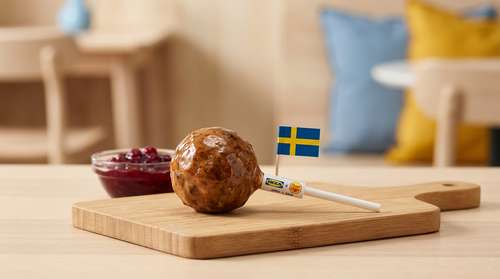
The culinary world is no stranger to bizarre mashups, but the IKEA Meatball Lollipop might just be the most intensely debated snack of the year. Unveiled yesterday as the crown jewel of the brand's April Fools Day 2026 shenanigans, this fictional sweet-and-savory treat immediately set the internet ablaze. What began as a clever piece of funny food news quickly transformed into a genuine viral phenomenon, with a surprising number of shoppers demanding the home goods retailer actually stock the bizarre creation.
The Swedish Meatball Joke That Broke the Internet
The masterfully executed gag started a day early when the retailer teased their Instagram followers with a cryptic post reading, "something's coming". On the morning of April 1st, the punchline finally dropped: a highly publicized Chupa Chups IKEA collaboration. The announcement promised a "world-first" snack that brings the beloved savory staple to a stick, completely glazed in a tangy lingonberry finish.
In classic Scandinavian fashion, the marketing materials proudly boasted that the new treat required "no assembly or Allen key". The IKEA lingonberry lollipop was pitched as the ultimate on-the-go snack for adventurous eaters who want the famous food court experience without needing plates, gravy boats, or cutlery. The company even fabricated highly specific early tasting notes, claiming taste testers said things like, "My tongue is confused, but my heart is happy" and "More meatballs to the people!".
Why the Chupa Chups IKEA Collaboration Felt So Believable
Part of the reason this Swedish meatball joke landed so perfectly is the sheer plausibility of the partnership. Chupa Chups is an iconic, global confectionery giant known for pushing flavor boundaries, while the furniture retailer has increasingly prioritized its wildly successful food markets. By presenting the concept as an official corporate joint venture, the announcement carried an air of legitimacy.
To back up their prank, the press release humorously cited "new data" suggesting 46% of people admit to having a major sweet tooth. For thousands of fans, this fictional statistic resonated a little too well. Social media users flooded comment sections, confessing that if the retailer sold the IKEA Meatball Lollipop at the checkout lanes, they would undoubtedly toss a few into their iconic blue FRAKTA bags.
Food bloggers and everyday consumers alike began debating the culinary merits of the snack. Since traditional Swedish meatballs are inherently paired with lingonberry jam, the flavor profile of the IKEA lingonberry lollipop already has a proven, centuries-old foundation. The jump from a hot, gravy-covered meal to a room-temperature hard candy is a drastic one, but the balance of savory umami notes and tart fruit sweetness is undeniably appealing to the modern palate. It is this exact tension between weird and wonderful that made the joke so highly effective.
How It Compares to Other Viral Brand Pranks in 2026
April Fools Day 2026 proved that corporate marketing teams are no longer holding back, with campaigns leaning heavily into concepts that felt just realistic enough to cause double-takes. The internet was treated to a dizzying array of fake launches, and while the meatball on a stick reigned supreme, it faced stiff competition in the faux-food space.
For example, beloved cheese brand Babybel "teamed up" with Monty Bojangles to announce the "Choccybel," a terrifyingly intriguing peelable cheese wrapped in a cocoa-dusted truffle shell. Meanwhile, Tesco targeted the fitness crowd by promoting a giant-sized boiled Easter egg. Crunch Fitness even jumped in with a TikTok video advertising "Crunch Muscle Mist," jokingly marketed as the world's first protein vape delivering 35 grams of protein per puff.
Even non-food brands delivered memorable viral brand pranks. Beauty brand Glossier reportedly tapped tinned-fish company Fishwife to create a "Glossier Sardine" skincare addition, while Boots Opticians unveiled "Willow and Rain" glasses equipped with miniature windscreen wipers for drizzly British weather. Supermarket giant ASDA introduced concept drawings for an adult-sized trolley seat, complete with armrests and cupholders, supposedly designed to contain distracted shopping partners. Yet, despite the creativity of these campaigns, the IKEA Meatball Lollipop sparked the loudest conversation, blurring the line between a hilarious gag and a viable retail product.
Will the Savory Snack Ever Become Reality?
Currently, the bizarre confection remains firmly in the realm of corporate comedy. However, consumer history shows that when a joke generates enough organic, overwhelming demand, brands sometimes fold to public pressure. We have seen gag products successfully transition into real limited-edition novelty releases before when the marketing hype justifies the production costs.
For now, you will not find the savory creation waiting for you alongside the cinnamon rolls and hot dogs at the store exit. But if the sheer volume of positive feedback is any indication, the culinary innovation team might want to seriously reconsider their stance. Until then, hungry shoppers will have to settle for buying a traditional plate of Köttbullar and a regular lollipop, enjoying them separately while dreaming of the day the ultimate flavor mashup becomes reality.