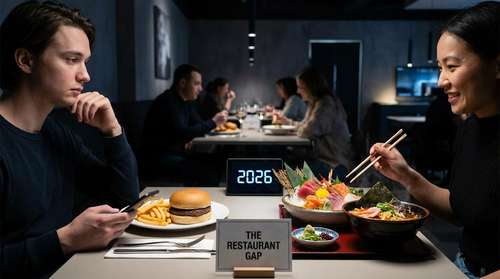
Modern romance requires navigating an absolute minefield of compatibility checks. But long before you argue over finances, future plans, or living arrangements, you have to decide where to eat. Enter the Restaurant Gap dating trend, the latest hyper-specific hurdle taking over social media and dividing modern singles. If you are an adventurous eater who refreshes the Resy app by the hour to snag an exclusive table, can you really build a life with someone who views food as mere fuel? This exact question is tearing the internet apart right now, proving that our culinary habits might be the ultimate compatibility test. Whether you call it a quirky internet obsession or a genuine relationship barrier, daters everywhere are asking themselves if differing appetites spell doom for their romantic futures.
What Exactly is the Restaurant Gap?
Described recently by cultural commentators as a fundamental misalignment in dining tastes, spending habits, and culinary curiosity, the restaurant gap has struck a serious chord. It goes far beyond the classic foodie vs picky eater debate. It represents a deeper division in how partners experience the world and allocate their resources. Are you the type to plan entire vacations around Michelin-star reservations, or are you perfectly content grabbing a quick bite from a drive-thru on the way home?
The term exploded into the mainstream in April 2026 after a viral thread on X (formerly Twitter) by new media writer Elena Burger highlighted just how polarizing dining preferences can be. For many singles, discovering a massive disparity in restaurant enthusiasm is rapidly becoming one of the most prominent 2026 relationship dealbreakers. It forces couples to confront how they value aesthetics, social currency, and disposable income.
The Fine Dining Litmus Test
In the viral discussions that popularized the term, one user shared a screenshot where a dating app match offered a first date at Nobu Malibu for oceanview drinks. While some readers swooned at the luxurious invitation, others immediately tapped out. "Lost me at Nobu," one user famously replied, instantly cementing the divide. This highlights how fine dining acts as a cultural flashpoint. For some, dropping hundreds of dollars on a curated tasting menu is a passionate, worthwhile hobby. For others, it feels incredibly pretentious or financially irresponsible. This stark contrast in values is exactly why the gap feels so difficult to bridge.
Why Niche Compatibility Gaps Are Taking Over in 2026
We are living in the golden age of micro-analyzing our romantic partners. While sweeping differences like age, wage, and politics have long been mainstream relationship labels, social media relationship trends have shifted toward highly specific lifestyle markers. In recent months, TikTok and X have been flooded with these hyper-focused categories. You might have heard of the "swag gap," which describes a relationship with a noticeable imbalance in personal style and coolness, or the "credit card gap," which pits cash-back loyalists against elite travel points hackers.
The restaurant gap fits perfectly into this growing ecosystem of niche compatibility gaps. We use these catchy labels as a convenient shorthand to predict whether a fledgling romance has long-term viability. When you increasingly rely on viral relationship tests to vet your prospective dates, a simple disagreement over where to grab a casual Friday night dinner suddenly feels like a profound moral divergence rather than a simple difference of opinion.
Is Culinary Misalignment Really a Dating Red Flag?
But is refusing to eat raw oysters or balking at a $200 dinner tab genuinely one of the top dating red flags 2026 has to offer? Relationship experts and social media commenters remain fiercely divided on the issue. On one side of the aisle, culinary enthusiasts argue that sharing a meal is a cornerstone of intimacy. If one partner views an omakase sushi experience as high art and the other views it as an expensive waste of time, resentment will inevitably brew. You end up either dining alone, compromising your passions, or constantly arguing over the household budget.
On the other hand, skeptics point out that expecting your partner to be your exact cultural clone is a recipe for boredom. Having a gap in your relationship introduces much-needed duality. How boring would it be to date someone who sees the world exactly the way you do? Sometimes, contrasting preferences provide healthy space within a partnership.
Surviving the Foodie vs Picky Eater Debate
Before you end a perfectly healthy relationship over a differing appreciation for fermented tasting menus, take a step back and look at the underlying mechanics of your dynamic. The true test isn't whether your partner wants to eat the exact same dishes you do, but rather how you handle your differences together. Do they respect your culinary hobbies, even if they opt out of participating? Are you willing to find a comfortable middle ground without being condescending about their simpler tastes?
Ultimately, the internet will always find new, creative ways to test couples. Tomorrow, there will undoubtedly be another trending gap to worry about. As one viral commenter astutely pointed out, we shouldn't be panicking over restaurant choices when society hasn't even solved the "even split vs. itemized" bill debate. If you can successfully navigate mutual respect, your relationship just might survive the restaurant gap.