In a historic and volatile turn of events that has sent shockwaves through the geopolitical landscape, President Donald Trump has confirmed the successful capture of Venezuelan leader Nicolas Maduro. The operation, executed by U.S. special forces under the codename "Operation Absolute Resolve," marks the culmination of a months-long military buildup in the Caribbean. Speaking from the White House this morning, President Trump declared that the "reign of the narco-terrorist regime is over," signaling a dramatic shift in US military news 2026. As American troops secure key infrastructure in Caracas, global markets are reeling, with the Venezuela oil crisis entering an unprecedented phase.
'Operation Absolute Resolve': How the Raid Unfolded
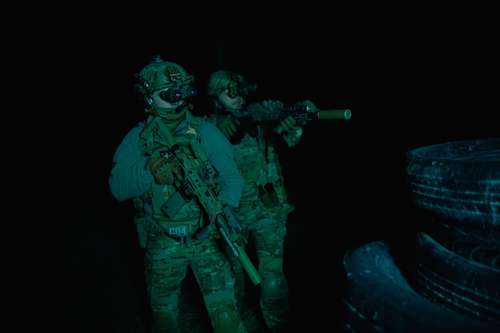
The dawn raid on Miraflores Palace, launched less than 48 hours ago, was described by Pentagon officials as a "surgical strike" designed to decapitate the Venezuelan leadership with minimal civilian casualties. According to defense sources, U.S. elite units, supported by the USS Gerald R. Ford carrier strike group stationed off the coast, breached the presidential compound in Caracas early Friday morning. Nicolas Maduro captured alive, along with his wife Cilia Flores, was immediately transported to a secure facility before being flown to the United States to face justice.
Reports confirm that resistance from the Venezuelan National Guard was sporadic, with many units standing down as U.S. aircraft dominated the airspace. "We caught them by surprise," President Trump stated, emphasizing that the operation was necessary to dismantle the "Cartel of the Suns," a drug-trafficking organization the Department of Justice alleges Maduro has led for over a decade. The Trump Venezuela invasion narrative has drawn sharp criticism from adversaries like Russia and China, who have condemned the action as a violation of sovereignty, yet the White House maintains the operation was a law enforcement extraction authorized under international anti-terrorism protocols.
Maduro Arraigned in New York on Narco-Terrorism Charges
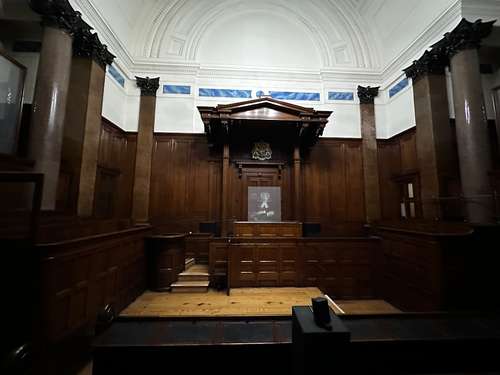
In a surreal scene broadcast globally, Nicolas Maduro appeared before a federal judge in the Southern District of New York late yesterday. The unsealed indictment charges the former bus driver-turned-president with narco-terrorism conspiracy, cocaine importation, and possession of machine guns. Prosecutors allege Maduro flooded the United States with cocaine as a "weapon" against American society. Dressed in a prison-issue jumpsuit, Maduro entered a plea of not guilty. His defense team is expected to challenge the legality of his extraterritorial capture, a legal battle that legal experts predict will define international law for the next century.
The 'Interim' Administration
In a surprising strategic move, the U.S. has not immediately installed opposition figures but has instead allowed Vice President Delcy Rodríguez to remain as a provisional interim authority under strict U.S. supervision. This decision appears calculated to maintain administrative continuity while U.S. administrators—referred to by Trump as "transition managers"—begin the process of dismantling the regime's illicit networks. "We are running the country for now," Trump told reporters, "until a proper, free, and fair election can be organized."
The $100 Billion Oil Gamble
Central to this military intervention is Venezuela's vast energy wealth. President Trump has made no secret of his intention to utilize the nation's oil reserves—the largest in the world—to offset the costs of the operation and stabilize the Venezuela oil crisis. On Friday, the President met with top executives from ExxonMobil, Chevron, and other energy giants at the White House, securing what he termed a "pledge of $100 billion" to rebuild Venezuela's dilapidated oil infrastructure.
"We are going to fix it, and we are going to keep the oil flowing," Trump announced. The administration's plan involves U.S. companies taking over production facilities formerly run by the state-owned PDVSA, with revenues deposited into U.S.-controlled escrow accounts. This "Liquid Gold" strategy is pitched as a way to repay the U.S. taxpayer for the military operation, though it has sparked intense debate about the ethics of resource appropriation during a global conflict update.
Global Fallout and Market Volatility
The capture of a sitting head of state has triggered immediate economic repercussions. Oil prices spiked 15% immediately following the news, with Brent crude surpassing $110 a barrel before stabilizing as Trump promised increased production. White House breaking news briefings have attempted to calm fears of a long-term disruption, but the energy sector remains jittery. Meanwhile, protests have erupted in several Latin American capitals, while exiled Venezuelans in Miami celebrated in the streets, hopeful that the decades-long crisis is finally nearing its end.
As US military news 2026 continues to develop, the world watches to see if this bold gamble will lead to a democratic transition or a prolonged occupation. For now, the image of Nicolas Maduro in U.S. custody serves as a stark warning of the new administration's aggressive foreign policy doctrine.