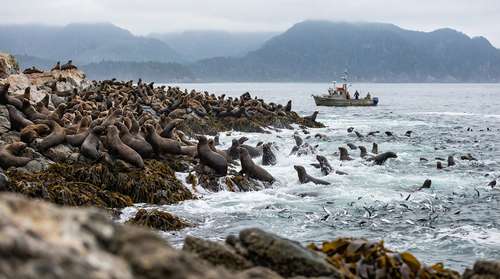
A quiet coastal community has been abruptly transformed into a loud, blubbery wildlife mosh pit, thanks to the arrival of hundreds of hungry Vancouver Island sea lions. Setting up camp on the sandy spits of Deep Bay, British Columbia, this massive gathering of California sea lions is drawing immense crowds and creating a raucous scene that can be heard long before it is seen. If you are looking for weird nature news, this coastal takeover definitely fits the bill.
Marine biologists and locals alike are marveling at the sheer volume—and volume-level—of the animals. According to marine mammal experts, this seasonal arrival is a highly anticipated part of the local ecosystem, though the density of this year's visitors has temporarily turned a sleepy rural neighborhood into a bustling tourist attraction. The animals have essentially roared into town for a singular purpose: gorging themselves during the spectacular herring feast 2026.
A Bizarre Animal Behavior Spectacle at Deep Bay
The takeover began in early March 2026, when an unexpected sea lion swarm descended on Mapleground Point and the surrounding beaches of Deep Bay. These noisy marine mammals typically stick to floats, docks, and rocky outcroppings around the local marinas. This year, however, they have boldly claimed the sandy beaches, completely carpeting the shoreline. The air is now filled with their incessant, dog-like barking—a cacophony that continues 24 hours a day.
Experts watching this Canada wildlife viral sensation note that this highly social, rowdy gathering is completely natural, even if it looks delightfully chaotic. Andrew Trites, a leading marine mammal researcher at the University of British Columbia's Marine Mammal Research Unit, recently likened the gathering to a "biker gang" that has suddenly shown up for an annual convention without any advance warning. They arrive loudly, hang out in massive piles, and dominate the landscape until they decide to pack up and head south.
Why the Sea Lion Biker Gang Wants the Herring Feast 2026
So, what brings this blubbery brotherhood so far north? The answer lies in the Pacific herring spawn, an ecological phenomenon that turns the coastal waters a milky turquoise blue every spring. Male California sea lions travel up the coast specifically to intercept these massive schools of fish. For the sea lions, the herring are the ultimate all-you-can-eat buffet.
To these massive marine predators, herring are incredibly fatty and calorie-dense. Researchers compare the small fish to "sticks of butter," providing the exact nutritional profile these males need. The primary goal of this sea lion biker gang is not just survival, but vanity and reproductive success. They are aggressively packing on as many pounds as possible so they can return to their breeding grounds in California and Mexico looking impressively massive to potential mates.
The Ripple Effect on Local Fishermen
The animals' insatiable appetite for herring has also created headaches for local fishing operations. Just weeks prior to the Deep Bay beach takeover, fishermen operating around Northumberland Channel reported thousands of sea lions swarming their boats and jumping directly into their nets. One notable incident forced the delay of a major charity herring sale intended to support children with cancer, as the sea lions successfully raided a massive catch. It was a classic display of bizarre animal behavior, leaving the fishermen empty-handed and the sea lions completely stuffed.
Canada Wildlife Viral: Spectators Flock to the Rally
It didn't take long for videos and photos of the Deep Bay takeover to spread online, turning the event into a massive draw for locals and tourists. Curious onlookers have been driving from all over the region—Victoria, Nanaimo, Parksville, and beyond—to witness the spectacle in person. The sight of hundreds of massive, barking sea lions completely covering a usually quiet beach is an experience many describe as straight out of a high-budget nature documentary.
Visitors are thrilled by the opportunity to see these impressive creatures up close. Shutterbugs line the shores to capture the chaotic energy of the gathering. Between the spectacular splashes in the water and the sheer comedy of hundreds of chubby sea lions arguing over sleeping spots on the sand, the event has provided endless entertainment.
The gathering is just one part of a larger ecological event. The herring spawn triggers a massive feeding frenzy that attracts not just sea lions, but bald eagles, blue herons, and even humpback whales. For coastal First Nations, the return of the herring is an auspicious time representing the arrival of spring and a traditional period for gathering food.
Keeping a Safe Distance from the Sea Lion Swarm
While the urge to get the perfect photo for social media is strong, wildlife officials and the Department of Fisheries and Oceans are urging the public to exercise caution. This is not a petting zoo. Federal regulations require all people and their pets to maintain a strict distance of at least 100 meters from marine mammals. Approaching the sea lion swarm can trigger dangerous reactions, putting both the public and the wildlife at serious risk.
Despite their clumsy appearance on land, California sea lions are massive, powerful predators that can move surprisingly fast when agitated. Disrupting their crucial resting and digestion periods can also add unnecessary stress to animals that are simply trying to bulk up for their long journey home.
The rowdy visitors are expected to stick around the Deep Bay area through late April or early May, directly tracking with the availability of the herring. Until the fish move on, the coastline will remain the exclusive territory of this barking, blubbery biker gang—a noisy reminder of the untamed and delightfully weird nature right on our doorsteps.