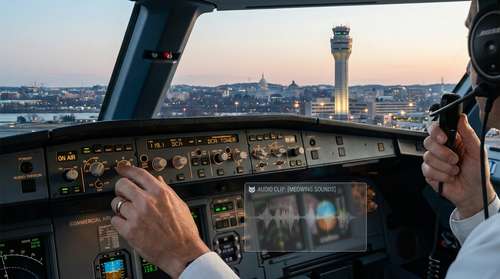
There is a time and a place for animal impressions, and according to the Federal Aviation Administration, the congested skies over the nation's capital are definitely not it. An audio recording of pilots meowing on radio channels during their approach to Ronald Reagan Washington National Airport has taken the internet by storm, blending genuine aviation discipline with pure absurdity. The recent viral clip captures flight crews making cat and dog noises over the air traffic control frequency, an exchange that abruptly ended when an exasperated voice stepped in to demand order.
It did not take long for this bizarre snippet to join the hall of fame for funny air traffic control clips. However, beneath the humor lies a serious discussion about safety protocols in one of America's busiest and most restricted airspaces. While aviation enthusiasts share laughs online over the absurd incident, federal officials are launching an investigation to identify the anonymous pranksters who hijacked the airways.
The Viral Audio: DCA Airport Pilot Animal Noises Explained
Recorded on April 12, 2026, the peculiar exchange unfolded on an active frequency near Arlington, Virginia. What started as routine operational coordination quickly devolved into a rogue pet parade. According to the released audio, unnamed pilots began inserting distinct "meow" and "woof" sounds into the gaps between official radio transmissions.
The situation escalated when an exasperated individual—believed to be a controller monitoring the frequency—decided he had heard enough of the DCA airport pilot animal noises. In a stern voice, the man intervened with a direct warning: "You guys... need to be professional". Instead of apologizing, the pranksters immediately responded with another defiant animal noise.
This prompted the ultimate aviation burn from the disciplinarian: "This is why you still fly an RJ". For those unfamiliar with industry jargon, an "RJ" refers to a Regional Jet. The controller was effectively mocking the instigators for being junior pilots who haven't yet made it to the major airline leagues. Another pilot on the channel dryly noted, "It was funny the first five minutes," cementing the 15-second clip's status as top-tier aviation humor 2026.
FAA Probe: When Viral Pilot Videos Spark Federal Reviews
What makes for excellent funny local news Virginia doesn't always fly with federal regulators. The Federal Aviation Administration has confirmed it is reviewing the audio and investigating the incident to determine if the pilots violated strict communication rules. Catching pilots meowing on radio might be hilarious on social media, but it creates genuine headaches for the agencies responsible for keeping the skies safe.
The FAA mandates that pilots adhere to a strict rule when flying below 10,000 feet altitude. This regulation explicitly prohibits flight crews from engaging in non-essential conversations during critical phases of flight, such as taking off or landing. The airspace around Washington D.C. is heavily monitored and incredibly dense, leaving zero margin for error or distraction.
Furthermore, reports indicate that the horsing around may have taken place on the 121.5 MHz frequency. Often referred to as "guard," this ultra-high frequency is globally reserved for emergency distress calls and vital notifications. Clogging a critical emergency channel with animal noises creates massive safety risks if a genuine aircraft crisis were to occur simultaneously.
The Tradition of "Meowing on Guard"
Surprisingly, this isn't an entirely unprecedented phenomenon. Within the tight-knit world of commercial aviation, rogue radio banter is a known, albeit frowned-upon, annoyance. Veteran pilot Dennis Tajer recently noted in an interview that hearing a random meow on the "guard" frequency has been an inside joke among aviators for years. Despite its prevalence as an underground meme, performing the stunt near such a high-profile location has pushed the joke into highly risky territory.
Public Reaction to the Reagan National Airport Viral News
The internet is predictably divided over the incident. On social media platforms where viral pilot videos thrive, many users found the audio completely hilarious. Supporters argue that commercial pilots endure grueling schedules, extreme stress, and monotonous stretches of flight, making a harmless moment of levity totally understandable. To them, the brief meowing is nothing more than standard workplace banter translating to the skies.
Conversely, aviation safety experts and frequent flyers following this Reagan National Airport viral news are far less amused. Managing the approach into DCA requires intense concentration due to the airport’s proximity to restricted government airspace, including the White House and the Pentagon. Even a minor distraction or a stepped-on radio transmission could lead to catastrophic misunderstandings. The sharp rebuke captured on the tape highlighted the reality that millions of lives depend on absolute professionalism in the cockpit.
What Happens Next for the "Stray" Pilots?
As the investigation unfolds, the FAA will be reviewing the incident to see if formal rules were broken. Authorities will likely analyze flight logs, radar data, and the radio recordings to pinpoint exactly which aircraft were involved in the disruption. If identified and found guilty of violating sterile cockpit rules, the pilots could face severe reprimands ranging from temporary suspensions to permanent revocations of their commercial flying licenses.
For now, the identities of the "meowing" and "barking" culprits remain a mystery. The audio stands as a legendary piece of internet gold, capturing a surreal clash between the ultra-serious world of aviation logistics and schoolyard antics. While we wait for the FAA's final ruling on the matter, the clip serves as a permanent reminder that if you are going to make animal noises on a live mic, you might end up grounded.