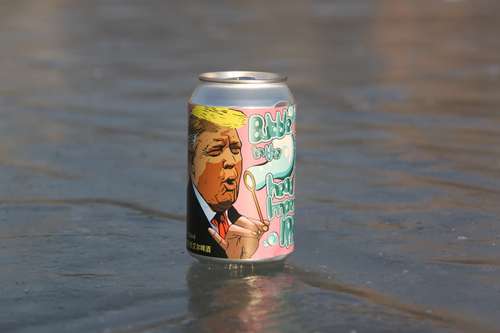
President Donald Trump has once again set the internet ablaze, this time by dropping a medical bombshell that left oncologists face-palming and meme creators working overtime. The bizarre claim? That his daily barrage of artificially sweetened fizzy drinks is actually a secret weapon against terminal illness. Yes, the Trump diet soda cancer theory is officially the digital world's favorite new obsession.
While the White House has since scrambled to label the remark a harmless dad joke, the damage—and the comedy—was already done. We are currently witnessing an unprecedented wave of "Coke-Cure" content, blending medical satire with political absurdity. Here is exactly how a casual chat on a podcast morphed into one of the most talked-about cultural moments of the year.
The Podcast Moment That Broke the Internet
The controversy originated when Dr. Mehmet Oz—the daytime TV veteran recently tapped to lead the Centers for Medicare and Medicaid Services—made a revealing appearance on the Trump Jr Triggered podcast clip that is currently racking up millions of views across social media. Oz recounted a highly unorthodox conversation he had with the president regarding his infamous beverage habits.
According to Oz, he walked into a meeting on Air Force One and questioned the president about an orange Fanta sitting prominently on his desk. Trump reportedly flashed a sheepish grin and delivered a line that instantly short-circuited the medical community: "You know, this stuff's good for me—it kills cancer cells".
Grass, Fanta, and "Fresh-Squeezed" Logic
The logic behind this Donald Trump podcast viral moment gets progressively stranger. Dr. Oz explained that the president argues his diet soda is medicinal because, supposedly, it kills grass when poured on a lawn. By that rationale, Trump concluded, it must eradicate malignant tumors inside the human body.
He also allegedly justified his Fanta habit by claiming the violently orange, high-fructose beverage was perfectly healthy because it was "fresh-squeezed". (For the record, American Fanta is made primarily with carbonated water and high fructose corn syrup, lacking any actual fresh juice).
Instead of pushing back on this baffling pseudo-science, Donald Trump Jr. simply chuckled. He brushed off the comments, suggesting his father might actually be onto something, given his unusual stamina and recall for a man pushing 80 years old.
The Anatomy of a Viral Meme Goldmine
Within hours of the audio surfacing, the Trump diet soda joke morphed into an inescapable social media phenomenon. Platforms like TikTok, X, and Instagram were heavily saturated with viral soda memes. Users began posting photoshopped images of soda fountains replacing chemotherapy IV drip bags, while others printed sarcastic prescription labels for two-liter bottles of Diet Coke to proudly display in their refrigerators.
From "Fresh Squeezed" to TikTok Trends
One massive TikTok trend involves users pouring various carbonated drinks onto their front lawns to test the "grass-killing" hypothesis, set to the dramatic background music of hit medical dramas. Other creators are dressing up in lab coats, holding clipboards, and prescribing "10 milligrams of Sprite" for mild ailments.
The entire spectacle ranks easily among the most funny political gaffes 2026 has delivered so far. It perfectly encapsulates how rapidly modern digital culture metabolizes bizarre political soundbites into sheer comedic gold, proving that the internet never misses an opportunity to turn a head-scratching quote into a global trend.
Busting the Diet Coke Health Benefits Myth
At the White House, Press Secretary Karoline Leavitt quickly entered damage control mode. She dismissed the uproar by insisting the president "has a very good sense of humor" and that the remark was a long-running joke he frequently tells. However, the medical community found absolutely zero humor in the situation.
The Diet Coke health benefits myth is a persistent issue for public health officials, and having the Commander-in-Chief casually link sugary or aspartame-laced drinks to oncology pushed doctors to speak out. Physicians across the country took to their social media channels to issue blunt, factual reality checks.
What the Experts Actually Say
Chicago-based immunologist Dr. Zachary Rubin pointed out the massive flaw in the president's grass-killer logic. He noted that if the ability to kill grass equates to cellular healing, household bleach would be considered a superfood—a subtle nod to the infamous 2020 disinfectant remarks. Global health policy expert Dr. Vin Gupta chimed in to clarify that regular soda doesn't even kill grass anyway; the president was likely confusing it with baking soda.
More seriously, Dr. Pearl Anand, a radiation oncology consultant, called the viral clip a "major oncology communication problem". She warned that statements blurring the line between prevention, treatment, and cure can tragically encourage patients to delay real, life-saving therapies. Furthermore, the World Health Organization's cancer research arm actually classified aspartame—the artificial sweetener found in most diet sodas—as "possibly carcinogenic to humans" back in 2023. In plain terms, it is far more likely to be a health risk than a miracle cure.
A Punchline That Will Linger
For a politician who famously credits his longevity to "great genetics" while reportedly maintaining a diet heavy on fast food, candy, and soda, this defense is completely on brand. Health Secretary Robert F. Kennedy Jr. recently noted that despite eating McDonald's regularly on the campaign trail, the president seemingly has the "constitution of a deity".
Whether you view the podcast revelation as a harmless dad joke blown out of proportion or a reckless piece of medical misinformation, the fizz from this story isn't going flat anytime soon. Clinicians will continue to battle the fallout, but the internet has officially crowned its favorite new comedic obsession. And ironically, it comes with zero nutritional value.