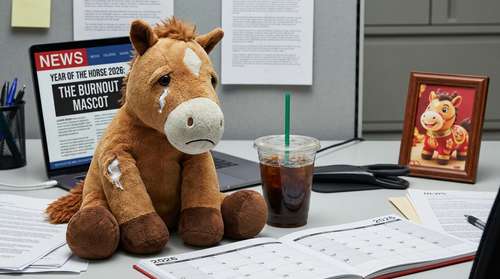
In a twist of fate that no marketing team could have scripted, the designated mascot for the Year of the Horse 2026 isn't a symbol of unbridled energy or galloping success. Instead, it is a red, teary-eyed equine that looks like it just finished a double shift on a Monday. Known affectionately as the "Mournful Mare" or the "Crying Horse," this accidental plushie fail has galumphed its way into the hearts of overworked employees worldwide, becoming the unofficial patron saint of workplace burnout.
The Happy Accident Behind the Sad Horse
The story begins in Yiwu, China—the world's wholesale capital—at a toy factory owned by a woman named Zhang Huoqing. As production ramped up for the upcoming Lunar New Year celebrations, a single manufacturing error changed everything. A worker on the assembly line at the "Happy Sister" shop inadvertently stitched the mouths of a batch of red horse plushies upside down.
Intended to be a cheerful, smiling decoration for the Year of the Horse 2026, the toy was transformed into a creature of profound sorrow. With its downturned mouth, averted gaze, and a festive gold bell that somehow makes the sadness even more poignant, the toy was initially viewed as a defect. Zhang planned to discard the "failed" batch or offer refunds. However, when a customer posted photos of the glitch online, the internet didn't mock it—they embraced it.
Why the 'Crying Horse' Plushie is Resonating Globally
The viral explosion of this sad horse toy wasn't just about a funny manufacturing fail; it was about recognition. For millions of Gen Z and millennial workers facing economic uncertainty and the pressures of the "996" work culture (9 am to 9 pm, 6 days a week), the horse's exhausted expression felt like looking in a mirror.
Social media platforms like Douyin and TikTok have been flooded with memes comparing the "expectation" (the original smiling design) to the "reality" (the crying version). Users joke that the smiling horse is them during the interview, while the viral sad horse toy is them three months into the job. It has become a tangible representation of relatable work burnout, allowing people to express their stress through humor. As one viral comment put it, "This horse isn't defective; it's just realistic."
From Factory Fail to Global Phenomenon
Demand for the accidental mascot has skyrocketed, catching retailers completely off guard. The "Happy Sister" factory has reportedly increased production to over 15,000 units a day to keep up with orders pouring in not just from China, but from South Africa, Southeast Asia, and the United States.
The Rise of 'Ugly-Cute' Mascots
This trend fits into a broader shift in consumer preferences toward "ugly-cute" (chou meng) aesthetics. In 2025, the toothy monster "Labubu" dominated the collector's market. Now, the torch has been passed to the Crying Horse plushie. Unlike the polished, hyper-happy mascots of the past, these imperfect toys offer emotional validation. They tell consumers that it's okay not to be okay—even during the festive season.
Chinese New Year Mascots: A Shift in Tone
Traditionally, Chinese New Year mascots are designed to usher in luck, prosperity, and joy. The Year of the Horse is usually associated with strength, speed, and vitality. The fact that the most popular symbol for 2026 is a depressed plushie speaks volumes about the global cultural zeitgeist.
Sociologists suggest that this phenomenon marks a departure from toxic positivity. People are tired of pretending everything is perfect. By adopting a "Mournful Mare," people are finding a healthy, communal way to acknowledge their fatigue. It’s a collective sigh of relief in plush form, proving that sometimes, the biggest wins come from the biggest accidental plushie fails.
Where to Find the Viral Sad Horse
If you're looking to snag one of these melancholy equines for your desk, patience is key. Online marketplaces are currently inundated with pre-orders, and scalpers are already flipping the "authentic error" versions for triple the price. Whether you view it as a funny gag gift or a legitimate emotional support object, one thing is clear: the Year of the Horse 2026 belongs to the sad, the stressed, and the tired. And honestly? We wouldn't have it any other way.