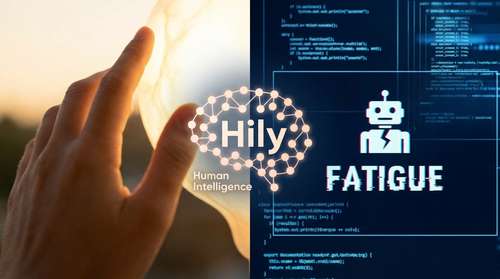
If you've logged onto a matchmaking platform recently, you might have noticed a creeping sense of robotic perfection. Flawless opening lines. Curated profile pictures smoothed over by generative filters. While the tech industry rushes to automate romance, a growing contingent of singles is hitting a breaking point. Enter the Hily human intelligence movement, a literal and cheeky counter-campaign rejecting the Silicon Valley takeover of our love lives. As daters rebel against tech-enhanced flirting, this push for raw, unfiltered connection is rapidly defining the most significant dating app trends 2026 has to offer. People are tired of swiping on polished avatars; they want the messy reality of human interaction back.
The Breaking Point: AI Dating App Fatigue
Over the past year, legacy platforms have scrambled to integrate large language models into their core interfaces. The boardroom pitch was simple: let an algorithm write your bio, generate your icebreakers, and optimize your match queue to save time. Yet, singles aren't buying into this tech-utopia. In fact, almost 80% of online daters now report feeling emotionally, mentally, or physically exhausted by the swipe grind, according to recent industry data.
This AI dating app fatigue stems from a profound disconnect. When a machine writes a witty opening message, it robs the recipient of genuinely getting to know the person on the other side of the screen. Instead of easing the burden of modern matchmaking, these automated tools have created a dystopian landscape where nobody knows if they are flirting with a potential soulmate or a highly sophisticated chatbot. The exhaustion isn't just about the sheer volume of matches; it's about the deep, lingering doubt surrounding online dating authenticity. The promise of effortless connection has instead mutated into a validation loop, leaving users feeling more isolated than ever before.
Enter 'HI': Hily's Human Intelligence Rebellion
Rather than joining the algorithmic arms race, the dating app Hily is taking a firm, public stand against it. Late last month, the platform officially relaunched its interface around 'HI'—an acronym for 'Human Intelligence'. The campaign serves as a direct, highly intentional response to competitors who are actively outsourcing romance to servers and code.
The user numbers backing Hily's pivot are striking. Fresh survey data reveals that over 69% of Gen Z and 74% of millennial daters feel AI-generated profiles and bios make online dating completely inauthentic. The human intelligence dating concept leans entirely into this generational rebellion. Hily is actively encouraging singles to embrace their awkwardness, showcase their unedited, imperfect photos, and write their own terrible puns. Julie Nguyen, Hily's in-house dating coach, perfectly captured the sentiment recently, noting that if we outsource connection to AI, we start to lose the intuitive ability to choose for ourselves—a process that teaches us about connection, which is beautifully human. The underlying message of the HI campaign? Relinquishing your charm to a computer fundamentally kills the romantic spark before it even has a chance to ignite.
Why Singles Are Rejecting the Bumble AI Push
Hily's counter-movement arrives right on the heels of the highly publicized Bumble AI backlash. Earlier this season, Bumble executives signaled a major conceptual shift, floating the idea of killing the traditional swipe in favor of an AI-powered experience designed to play digital matchmaker and even converse on a user's behalf.
The response from users was swift, loud, and merciless. Critics argued that the company had completely lost the plot. The friction of dating—the trial and error of navigating early, sometimes clumsy conversations—is exactly how humans gauge chemistry. Removing that friction essentially removes the human element altogether. This backlash highlighted a crucial reality for tech developers: while singles desperately want better matches, they fiercely refuse to surrender their personal agency to an algorithm.
Reclaiming Authenticity in Artificial Intelligence Relationships
What does this digital rebellion mean for the immediate future of modern romance? The industry is currently facing a massive, unavoidable schism. On one side, tech conglomerates are pouring millions into developing automated wingmen, photo-enhancers, and algorithmic concierges. On the other, a grassroots demand for analog, face-to-face connection is forcing platforms to completely rethink their long-term strategies.
We are watching a cultural reset in real-time. The pushback against artificial intelligence relationships proves that frictionless efficiency isn't the ultimate goal of finding a life partner. Love is inherently messy, inefficient, and wildly unpredictable. Hily's human intelligence initiative works because it acknowledges a fundamental truth: if we optimize the dating process too heavily, we strip away the very vulnerability that allows us to fall in love in the first place.
As the rest of 2026 unfolds, the platforms that survive this user burnout won't be the ones with the smartest code or the most advanced language models. They will be the ones that figure out how to put human flaws back at the center of the screen.