
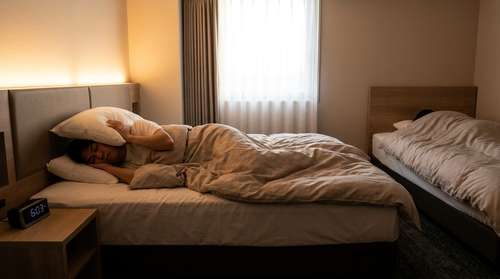
A brand-new survey of 2,000 U.S. adults has shed light on a surprising reality: about one in five people have walked away from a romance because of their partner's nighttime disruptions. While love can conquer a lot, it seems chronic fatigue is an entirely different battleground. If you are wondering about the exact bedroom habits causing breakup rates to spike, the data points clearly toward poor sleep compatibility. In fact, 17% of respondents reported ending a relationship solely because of a partner's disruptive rest routines, while another 6% cited it as a major contributing factor.
Snoring: The Ultimate Relationship Dealbreaker
When analyzing how snoring affects relationships, the numbers paint a bleak picture for loud sleepers. Snoring emerged as the undisputed champion of ruined romances, appearing in a staggering 62% of descriptions provided by those who ended things over sleep. It is no longer just a minor annoyance; it is a bona fide snoring relationship dealbreaker. Overall, 44% of all surveyed adults ranked it as the absolute most aggravating nighttime behavior. The friction makes perfect sense: interrupted rest frequently leads to heightened daytime stress, diminished empathy, and deep-seated resentment.
The Honesty Gap in Modern Dating
Interestingly, the Talker Research survey uncovered a massive honesty gap among ex-partners. Only 54% of those who initiated a breakup because of sleep issues actually told their partner the truth. Nearly half chose to invent a different excuse to spare their ex's feelings, leaving a significant number of people completely unaware that their heavy breathing was the true culprit behind the split.
Beyond the Noise: Common Sleep Habits Breakups
Of course, snoring isn't the only issue turning bedroom sanctuaries into war zones. When evaluating the bedroom habits causing breakup statistics, physical disruptions and conflicting schedules play a massive role. The survey, commissioned by Avocado Green Mattress, highlighted that common sleep habits breakups often stem from:
- Tossing and turning: Cited by 30% of frustrated partners.
- Blanket theft: Cover-stealing drove 27% of respondents crazy.
- Late-night screens: Watching television in bed irritated 24% of people.
- Midnight snacking: Eating in bed—like crunching on potato chips—annoyed 18%.
- Frequent bathroom trips: Waking up to use the restroom frustrated another 18%.
These seemingly minor infractions snowball over time. A single night of stolen covers might be easily forgiven, but months of fighting for warmth or waking up to the sound of television shows can erode a couple's foundation. Resentment has to start somewhere, and after enough sleepless nights, a bag of chips at midnight is as good a reason as any to pack a bag.
Understanding the Sleep Divorce Trend 2026
Instead of calling it quits, many modern pairs are opting for a highly practical alternative. Enter the sleep divorce trend 2026, a movement that has rapidly shifted from a taboo admission to a celebrated self-care strategy. A sleep divorce simply means that romantically involved partners choose to sleep in different spaces to prioritize their physical and mental health.
According to recent data from the American Academy of Sleep Medicine, roughly one in three American adults have tried sleeping in a separate space from their partner. If you have ever wondered why couples sleep apart, the answer usually boils down to survival and sleep architecture. Sleep deprivation costs not just relationships, but individual well-being and productivity. By prioritizing high-quality rest, partners often find they have more patience, intimacy, and energy for each other during their waking hours.
Couples Sleeping in Separate Beds: A Relationship Saver?
The societal stigma surrounding couples sleeping in separate beds is rapidly fading as the tangible benefits become undeniable. Research indicates that over 52% of those who initiate a sleep divorce report a noticeable improvement in their sleep quality. On average, these individuals gain an extra 37 minutes of uninterrupted sleep per night.
Far from being a sign of a failing marriage, choosing separate quarters can actually save one. By removing the nighttime friction, couples can enjoy cuddling, talking, or watching a movie together in the primary bedroom, then retreat to their respective spaces when it is time to actually shut their eyes.
How to Navigate Nighttime Incompatibility
If you find yourself lying awake at 3:00 AM harboring dark thoughts about your peacefully slumbering partner, it might be time for an intervention before it turns into a permanent breakup.
First, it helps to track the data. Wearable sleep devices can provide objective metrics showing exactly how much rest you are losing, shifting the conversation from emotional accusations to factual health concerns. Second, because severe snoring can often be a symptom of obstructive sleep apnea, it is vital to have a medical professional rule out underlying health issues before simply moving to the couch.
Finally, you do not necessarily need a spare bedroom to fix the problem. Even trying separate blankets—a practice often called the Scandinavian Sleep Method—can completely resolve cover-stealing and temperature disputes while keeping you in the same bed. Quality rest is the bedrock of any healthy partnership. If you are dealing with the frustrating bedroom habits causing breakup trends in your own home, whether you opt for earplugs, separate duvets, or a full-blown sleep divorce, prioritizing your rest might just be the most romantic thing you can do for your relationship this year.