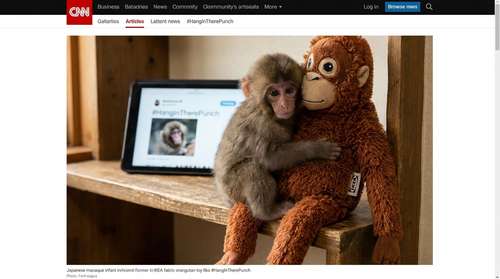
If you've tried to buy an IKEA Djungelskog orangutan plush recently, you might have noticed empty shelves or eye-watering resale prices online. The culprit isn't a supply chain crisis or a designer collaboration—it's Punch, a seven-month-old Japanese macaque who has inadvertently launched the biggest viral monkey IKEA toy trend of 2026. What started as a heartbreaking story of rejection at a Japanese zoo has spiraled into a global phenomenon, with the hashtag #HangInTherePunch driving fans to snap up the $20 plushie at a frantic pace, pushing resale values near $400.
The Heartbreaking Story Behind #HangInTherePunch
Punch, affectionately known as Panchi-kun by his keepers, was born at the Ichikawa City Zoo near Tokyo in July 2025. His life began with immediate hardship when his mother abandoned him shortly after birth—a devastating blow for a social primate. To make matters worse, when zookeepers attempted to reintegrate him into the troop earlier this year, the other macaques rejected him, with some even bullying the small infant.
In a stroke of brilliance that would soon break the internet, keepers gave Punch a soft, orange surrogate parent: the IKEA Djungelskog orangutan. The visual of the tiny, lonely monkey clinging desperately to the bug-eyed plushie struck a chord with millions. Videos of Punch dragging his "Oran-Mama" around the enclosure for protection instantly went viral on TikTok and X, turning a local zoo update into major trending animal news 2026.
From Bargain Bin to Luxury Item: The Price Surge
The economic impact of Punch's story has been swift and surreal. The IKEA orangutan plush price, originally a modest $19.99, has skyrocketed on secondary markets. As of late February 2026, listings on eBay and other resale platforms have been spotted reaching as high as $400, with desperate collectors and sympathetic fans driving up the cost.
IKEA stores across Japan, the United States, South Korea, and Singapore have reported complete stockouts. The retailer, known for its flat-pack furniture, found itself at the center of an emotional storm. In a savvy move, IKEA didn't just restock; they leaned into the moment. IKEA Japan's president personally visited the zoo to donate replacement plushies, ensuring Punch would never be without his comfort companion. Meanwhile, global ads have subtly rebranded the toy as "Punch's comfort orangutan," further fueling the fire.
Why This Specific Toy?
Zookeepers didn't choose the Djungelskog by accident. They needed a surrogate that was soft enough to cuddle but durable enough to withstand the rough-and-tumble life of a monkey troop. The plushie's long arms made it easy for Punch to cling to, mimicking the natural behavior of a baby macaque holding onto its mother's fur. It was a functional decision that accidentally created the perfect, tear-jerking aesthetic for a viral Japanese macaque video.
Latest Updates: Is Punch Finally Fitting In?
For those following the saga, there is good news coming out of Ichikawa City Zoo. Reports from the last 48 hours indicate that Punch is beginning to find his footing. Recent videos show him playing with other young monkeys without his plush safety blanket, a massive step forward in his social development.
While he still retreats to his stuffed protector when stressed or scared, the funny internet trends cycle has actually helped his real-world situation. The influx of visitors and global attention has put a spotlight on his care, and zookeepers report that he is "spending his time energetically," slowly learning the complex social cues of his species. The zoo's updates have shifted from heartbreaking clips of isolation to hopeful moments of connection, proving that even a viral sensation can have a happy ending.
The Ethics of Viral Animal Fame
The global obsession with Punch the baby monkey raises interesting questions about how we consume animal content. While the support has been overwhelmingly positive—resulting in donations and awareness—it highlights how quickly emotional narratives can commodify animal lives. The frantic buying of the plushie serves as a way for humans to participate in Punch's story, a tangible connection to a creature thousands of miles away.
However, experts remind us that macaques are wild animals, not pets. The goal remains for Punch to bond with his own kind, not with a polyester toy. The viral fame is temporary, but his need for a troop is permanent. As the #HangInTherePunch trend inevitably cools, the hope is that Punch will trade his $400 plushie for real grooming sessions with his fellow monkeys.