If you thought alligator tail or fried frog legs pushed the culinary envelope, you might want to grab a bigger spoon. In one of the most bizarre twists in weird American news, federal and local wildlife officials have a fresh, albeit unsettling, proposition for your dinner table: swamp rat gumbo. Yes, you read that correctly. This week, the government officially urged citizens across the Gulf South, particularly in Louisiana and Texas, to combat the escalating nutria invasive species crisis by simply eating the problem. The giant, orange-toothed aquatic rodents are tearing up vulnerable wetlands at an unprecedented rate, and authorities have decided that the most effective eradication method involves a dark, rich roux and a very adventurous appetite.
"Save a Swamp, Sauté a Nutria": The Government Swamp Rat Campaign
The U.S. Fish and Wildlife Service, working in tandem with state wildlife departments, has aggressively escalated its government swamp rat campaign over the past 48 hours. Their undeniably catchy, newly promoted slogan? "Save a Swamp, Sauté a Nutria." While it might sound like a satirical punchline, the ecological threat driving the initiative is dead serious.
Nutria were originally brought to the United States from South America in the 1930s to bolster the fur trade. They were hailed as a lucrative alternative to muskrat. However, when the fur market completely collapsed in the mid-20th century, thousands of these prolific breeders were released or escaped into the wild during massive hurricanes. Today, a single adult nutria can weigh a staggering 20 pounds. Even worse, they are capable of consuming a quarter of their own body weight in vital marsh vegetation every single day. Because they eat the roots of the plants, they completely destroy the structural integrity of the soil, leading to severe coastal erosion and turning vibrant wetlands into open water. With millions of dollars in habitat damage piling up annually, desperate officials realized that traditional bounties aren't enough. It was time to turn the pests into a poultry-adjacent delicacy.
Eating Nutria Recipes: Does It Actually Taste Like Rabbit?
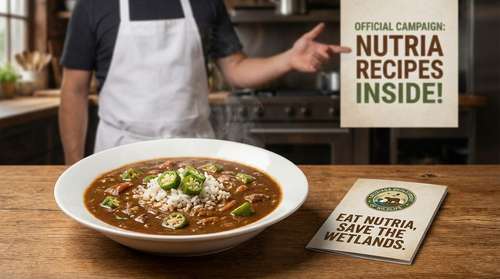
To help skeptical citizens stomach the idea of rodent for dinner, wildlife agencies are actively distributing official eating nutria recipes. The undisputed star of the campaign is the state-sanctioned swamp rat gumbo. According to the Louisiana Department of Wildlife and Fisheries, preparing the semi-aquatic beast isn't much different from cooking traditional wild game like venison or squirrel.
Federal spokespeople have gone on the record to assure the public that the meat is incredibly lean, mild, and tastes remarkably like wild rabbit or the dark meat of a turkey. Some adventurous chefs have even begun comparing the texture to premium pork loin medallions. If a heavy gumbo isn't your preferred style, government resources also offer detailed guides for a "heart-healthy Crock-Pot nutria," nutria jambalaya, and even roasted hindquarters. In a truly surreal twist that left internet commentators speechless earlier this week, an agency spokesperson suggested wine pairings for the invasive pests, noting that barbecue-glazed nutria pairs brilliantly with the fruity notes of a robust Zinfandel.
Louisiana Local News Reactions to the Giant Rodent Menu
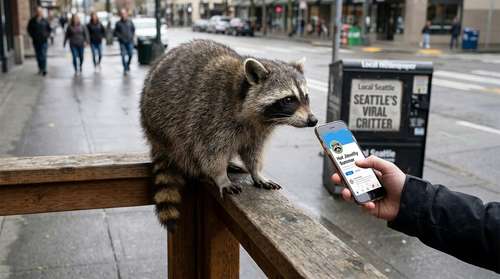
Unsurprisingly, the aggressive push to plate these aquatic pests has generated an absolute goldmine of funny local food stories. Across Louisiana local news broadcasts and Gulf Coast social media channels, residents are experiencing a hilarious, unpredictable mix of culinary curiosity and outright horror. Memes featuring giant, web-footed rodents swimming in massive cast-iron gumbo pots are currently going viral across platforms.
While seasoned hunters and trappers shrug off the campaign—quick to point out that local events like the recently wrapped Louisiana Nutria Fest have featured hunting and cooking competitions for years—the average suburbanite remains deeply unconvinced. As one local user aptly posted this week, earning thousands of shares: "I will do a lot of things to protect our coastal wetlands, but I draw the line at ladling a 20-pound swamp rat into my family's dinner bowl." Talk radio hosts in New Orleans and Baton Rouge have spent hours fielding calls from listeners debating whether enough hot sauce could adequately mask the psychological hurdle of eating a rodent.
A Serious Solution Wrapped in Weird American News
Despite the widespread jokes and undeniable shock value, the "eat the invaders" movement is gaining legitimate traction among environmentalists. Controlling invasive species through aggressive human consumption is a strategy that has proven highly effective in the past. Just look at the culinary success of hunting feral hogs in Texas or harvesting destructive lionfish in Florida and the Caribbean.
By actively reframing the nutria from a repulsive, destructive pest to a free, highly sustainable protein source, conservationists hope to drastically reduce the booming population before the next hurricane season. In Louisiana alone, a long-standing bounty program paying $6 a tail has helped cull hundreds of thousands of the animals, but getting the rodents onto restaurant menus and household dining tables could drastically accelerate the eradication process.
Whether you view it as a solemn ecological duty or a terrifying culinary dare, swamp rat gumbo is officially on the government's recommended menu this week. As the wetlands continue to disappear, the only question left for Gulf Coast residents is a simple one: are you brave enough to take the first bite?