
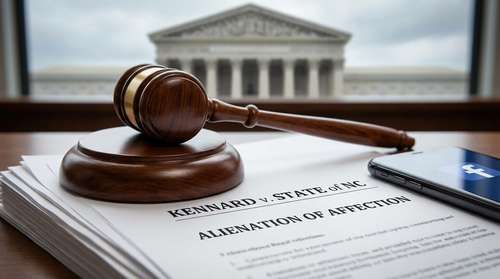
In a stunning collision of modern social media fame and centuries-old legal statutes, North Carolina TikTok influencer Brenay Kennard has found herself at the center of a $1.75 million legal storm. A jury recently ordered the content creator to pay the massive sum to Akira Montague, the ex-wife of Kennard's current husband, after finding her liable for "alienation of affection." The case, which has captivated millions online, took another dramatic turn this week as a judge barred influencers from the courtroom following a chaotic livestreaming incident.
The $1.75 Million Verdict: Alienation of Affection Lawsuit Explained
The legal battle centers on a rare civil tort known as alienation of affection, often referred to colloquially as a "homewrecker law." Akira Montague, the plaintiff, successfully argued that Kennard intentionally interfered with her marriage to Tim Montague, who was Kennard's manager at the time. The jury in Durham County awarded Akira $1.75 million in compensatory damages, agreeing that the influencer's actions were the primary cause of the marriage's destruction.
During the trial, the prosecution utilized a powerful and unconventional weapon: Brenay Kennard's own social media content. Attorneys presented TikTok influencer drama in its rawest form—vlogs, livestreams, and posts where Kennard allegedly flaunted her relationship with Tim while he was still married. This digital paper trail provided the jury with a real-time timeline of the affair, effectively sealing the verdict against the social media star.
North Carolina Relationship Laws and the 'Homewrecker' Statute
For many observers outside the state, the verdict is baffling. However, North Carolina relationship laws remain unique in the United States. It is one of only a handful of states (including Mississippi, South Dakota, New Mexico, Utah, and Hawaii) that still recognize alienation of affection as a valid cause of action. To win such a claim, a jilted spouse must prove three things:
- The marriage entailed genuine love and affection.
- The love and affection were destroyed.
- The defendant's malicious conduct was the controlling cause of this destruction.
Legal experts note that while these laws are often considered archaic—dating back to an era when spouses were viewed as property—they remain a potent tool in North Carolina courts. The homewrecker law 2026 landscape shows no signs of softening, with juries willing to hand down seven-figure punishments to third parties who actively dismantle marriages.
Breaking News: Influencers Banned from Courtroom
While the initial verdict was handed down in late 2025, the saga exploded again in the last 48 hours. During a recent compliance hearing regarding the payment and a potential violation of court orders, the presiding judge took the drastic step of clearing the courtroom. The decision came after it was discovered that attendees were livestreaming the proceedings on TikTok, a direct violation of court rules.
A group of traveling content creators calling themselves "Boots on the Ground" had descended on the Durham courthouse to document the Brenay Kennard verdict fallout. The judge's order to ban these influencers highlights the growing tension between the judicial system and the court of public opinion. "We got booted from the courtroom," one creator lamented in a video that has since gone viral, sparking fresh debate about public access to high-profile civil trials.
The Dr. Phil Interview and Public Backlash
Adding fuel to the fire, Kennard and her now-husband Tim Montague recently appeared on the Dr. Phil show to tell their side of the story. In the interview, Kennard insisted, "I'm not a villain," and claimed that Akira had consented to the relationship—a defense the jury evidently rejected. The TV appearance, combined with the cheating lawsuit payout news, has kept the story trending across platforms, drawing millions of views and polarizing comments.
Implications for Social Media Stars
This case serves as a stark warning to public figures and influencers: your content can and will be used against you in a court of law. The marriage legal news circuit is buzzing with the implications of this verdict. What was once shared for likes and engagement became the smoking gun that cost a creator nearly two million dollars.
As the case heads toward potential appeals and further compliance hearings in February 2026, the message from the North Carolina legal system is clear: the sanctity of marriage is protected by law, and digital fame offers no immunity from civil liability.