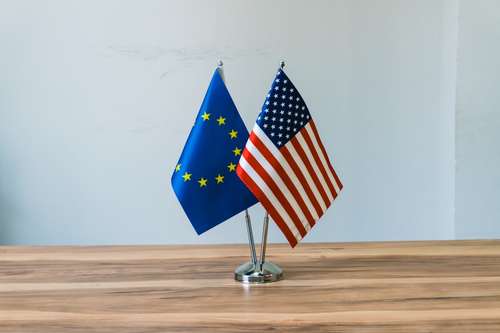
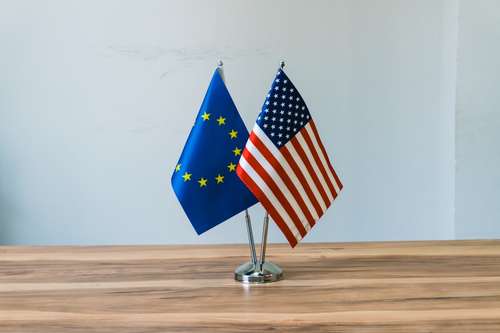
WASHINGTON, D.C. — Global markets are in freefall this Monday morning as traders react to President Donald Trump’s stunning weekend ultimatum: a 10% tariff on eight European nations, effective February 1, unless they facilitate the United States' acquisition of Greenland. The unprecedented threat, issued via Truth Social on Saturday, has sparked a transatlantic diplomatic crisis and ignited fears of a full-scale trade war between the U.S. and its closest NATO allies. As of mid-morning, the Dow Jones Industrial Average has plunged over 800 points, while European indices and crypto markets face similar devastation.
The Ultimatum: "Complete and Total Purchase"
In a move that has blindsided diplomatic channels, President Trump explicitly linked U.S. trade policy to territorial expansion. Writing on his social media platform, the President declared that imports from Denmark, Norway, Sweden, France, Germany, the United Kingdom, the Netherlands, and Finland would face an immediate 10% levy starting next month. He further warned that these penalties would escalate to 25% by June 1, 2026, if a deal for the "Complete and Total purchase of Greenland" is not reached.
The President cited "national security" as the primary driver, specifically referencing the need for Greenland's strategic location to host the proposed "Golden Dome" missile defense system. "We protect Europe, yet they block us from securing our own northern border against China and Russia," Trump wrote, characterizing the European stance as a betrayal of alliance obligations.
Allies Call It "Blackmail" as Tensions Boil Over
The targeted nations, many of whom recently participated in the Danish-led "Arctic Endurance" military exercise in Greenland, issued a blistering joint statement late Sunday. Leaders from the eight countries condemned the tariff threat as "commercial blackmail" and warned that such coercive measures "undermine transatlantic relations and risk a dangerous downward spiral."
The diplomatic fallout is spreading rapidly beyond the initial eight targets. In Brussels, European Union officials are reportedly convening emergency talks to activate the bloc's Anti-Coercion Instrument (ACI). Often referred to as the EU's "trade bazooka," this never-before-used mechanism would allow the EU to impose swift, punitive retaliatory sanctions on the U.S. without waiting for World Trade Organization rulings. French officials have already signaled they are ready to "respond in kind" if Washington follows through on the February 1 deadline.
The "Arctic Endurance" Spark
The immediate catalyst for Trump's ire appears to be the presence of European troops in Greenland last week for Operation Arctic Endurance. While NATO officials described the deployment as a routine exercise to test Arctic readiness, the White House has interpreted the move as a direct challenge to U.S. interests. Trump accused these nations of "militarizing" the island to prevent an American purchase, despite Denmark's repeated insistence that Greenland is not for sale.
Global Markets React: Panic Selling and Safe Havens
The financial impact of the dispute was immediate and severe when Asian markets opened early Monday. The sheer scale of the threatened tariffs—targeting major economies like Germany and the UK—has spooked investors who fear a recessionary drag on the global economy.
- Equities: The German DAX and France’s CAC 40 opened down more than 3%, dragging the pan-European Stoxx 600 to multi-month lows. In the U.S., futures suggest a brutal week ahead for the tech and manufacturing sectors.
- Crypto Crash: Bitcoin and major altcoins saw a "flash crash" overnight, shedding billions in market cap as risk assets were liquidated en masse.
- Commodities: Conversely, gold and silver prices have surged to new record highs as investors flee to safe-haven assets. Oil prices also ticked upward on fears of supply chain disruptions in the North Atlantic.
Why Greenland? The Strategic Stakes
While the purchase of Greenland has been a long-standing ambition of President Trump—first floated during his first term in 2019—the intensity of this current push suggests a shift in U.S. strategic priorities. Beyond the "Golden Dome" defense project, the island is home to vast untapped reserves of rare earth minerals essential for high-tech manufacturing, a sector where the U.S. is desperately trying to reduce reliance on Chinese supply chains.
However, analysts warn that using tariffs as a cudgel to acquire sovereign territory sets a volatile precedent. "This isn't just a trade dispute; it's a challenge to the concept of national sovereignty," notes geopolitical analyst Dr. Elena Corves. "If the U.S. is willing to wage economic war on its closest allies over a land purchase, the NATO alliance may be facing its most severe existential crisis since its founding."
As the February 1 deadline looms, all eyes turn to the upcoming World Economic Forum in Davos, where representatives from the targeted nations are expected to confront the U.S. delegation. For now, the global economy hangs in the balance, waiting to see if the "Art of the Deal" will lead to a historic acquisition or a historic recession.