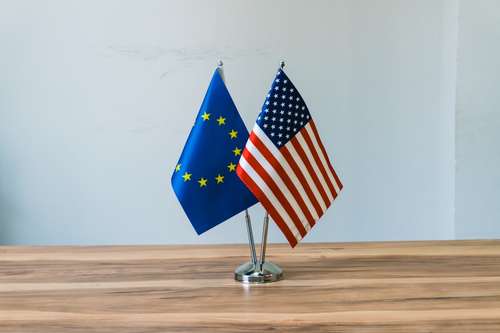
President Donald Trump has dramatically escalated his efforts to acquire Greenland, imposing a sweeping 10% import tariff on Denmark and seven other European nations in a move that has plunged transatlantic relations into chaos. The announcement, made via Truth Social on Saturday, January 17, 2026, explicitly links the punitive economic measures to the European Union's refusal to negotiate the sale of the Arctic territory. As the Trump Greenland purchase saga intensifies, the President warned that tariffs would rise to 25% by June 1 if a deal is not reached, sparking fears of a full-blown US EU trade war 2026.
The Tariff Ultimatum: A New Transatlantic Crisis
The new tariffs, set to take effect on February 1, target eight specific NATO allies: Denmark, Norway, Sweden, France, Germany, the United Kingdom, the Netherlands, and Finland. In his statement, President Trump declared the levies necessary to force a negotiation for the "Complete and Total purchase of Greenland," which he asserts is vital for American national security. This unprecedented use of economic coercion against close military allies marks a significant shift in US foreign policy, treating long-standing defense partners as obstacles to US territorial expansion news.
The trigger for this sudden escalation appears to be a recent joint military exercise in Greenland involving troops from the targeted European nations. Trump characterized this deployment as "a very dangerous game," interpreting the symbolic show of NATO unity as a direct challenge to American interests. By levying Greenland tariffs on Denmark and its supporters, the White House is effectively holding European exporters hostage to a real estate deal that Copenhagen has repeatedly dismissed as "absurd." The ultimatum leaves EU leaders with a narrow window to respond before the economic pain intensifies in June.
'Not For Sale': Europe and Greenland Push Back
Reaction across Europe was swift and furious. An emergency summit has been convened in Brussels, where EU leaders are currently weighing retaliatory measures. Danish Prime Minister Mette Frederiksen reiterated her government's stance, stating firmly that Greenland belongs to its people and is "not for sale." She was joined by French President Emmanuel Macron, who condemned the tariff threats as "unacceptable" intimidation, and UK Prime Minister Keir Starmer, who labeled the move "completely wrong" for an ally.
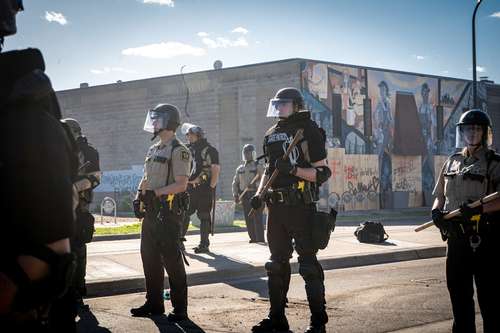
On the ground in Nuuk, the mood is defiant. Thousands have taken to the streets in Greenland independence protests, waving the Erfalasorput flag and chanting slogans against American annexation. Greenlandic Premier Mute Egede issued a statement emphasizing that while the territory welcomes cooperation, it will not be traded as a commodity. The crisis has galvanized the local population, pushing the conversation about independence from Denmark to the forefront, albeit with a clear rejection of becoming a US territory.
Strategic Stakes: The 'Golden Dome' and Arctic Security
Why is the President so fixated on this Arctic island? Beyond the resource wealth of rare earth minerals, Trump has explicitly linked the purchase to his proposed "Golden Dome" missile defense system. The US already operates the critical Pituffik Space Base (formerly Thule) in northern Greenland, a cornerstone of NATO Greenland security. However, the administration argues that full sovereignty is required to expand this infrastructure and counter growing Russian and Chinese influence in the Arctic.
Administration insiders report that the price tag being floated for the purchase exceeds $700 billion, a figure meant to entice Danish and Greenlandic officials. Yet, critics argue that the strategic value of Greenland does not justify fracturing the NATO alliance. By threatening the economies of key NATO members, Trump risks undermining the very collective security architecture he claims to want to strengthen. The focus on Donald Trump Truth Social Greenland posts suggests that this policy is being driven directly from the top, bypassing traditional diplomatic channels.
Domestic Fallout and the Path Ahead
The escalation has also drawn sharp criticism from within the President's own party. Republican Senators Lisa Murkowski and Thom Tillis have expressed deep concern, with Murkowski warning that weaponizing tariffs against allies could play into the hands of adversaries like Vladimir Putin. As the February 1 deadline approaches, the standoff presents a critical test for the Western alliance. Will Europe call the President's bluff, or will the economic pressure force Copenhagen to the negotiating table? For now, the 'Greenland Crisis' shows no signs of thawing.