In what might be the most skin-crawling law enforcement raid of the decade, wildlife authorities have dismantled an illicit breeding operation run by a suspected cockroach kingpin. Officials recently executed a massive australia cockroach seizure, confiscating more than 100,000 contraband invertebrates from a commercial property in Bathurst, New South Wales. This record-breaking haul, valued at approximately $140,000 USD on the black market, officially stands as the nation's largest-ever bust of illegal exotic insects. The astonishing collection featured thousands of madagascar hissing cockroach specimens alongside an invasive species known as the dubia cockroach, sending immediate shockwaves through the exotic pet trade.
Inside the Record-Breaking Bathurst Bug Bust
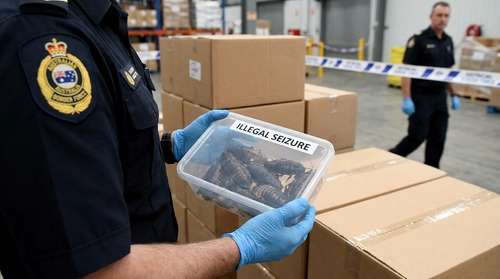
The raid, carried out on May 26 and announced to the public on Friday, uncovered a breeding setup of unprecedented scale. Investigators discovered shelves lined with plastic containers housing thousands of active breeding colonies. The visual evidence released by the Department of Climate Change, Energy, the Environment and Water (DCCEEW) revealed crates teeming with the illicit cargo.
Among the confiscated critters was the madagascar hissing cockroach, widely recognized as one of the world’s largest species. These shiny, brown behemoths can measure up to three inches long—easily capable of covering the entire palm of an adult hand. For comparison, the common Australian cockroach typically maxes out at around 1.4 inches. The Madagascar species is entirely wingless and emits a loud, distinctive noise when threatened, a defense mechanism that gives the bulky insect its namesake hiss.
Alongside them were tens of thousands of dubia cockroaches. Both species are highly sought after, driving a surprisingly lucrative black market that culminated in this historic bathurst bug bust. According to officials, the sheer volume of insects dwarfed any previous invertebrate confiscations in the country's history.
Why Breed 100,000 Illegal Exotic Insects?
You might wonder who would voluntarily share their property with 100,000 giant, hissing roaches. The answer lies in the highly profitable, yet underground, reptile trade. While some enthusiasts keep exotic invertebrates as pets, the vast majority of these insects were destined to become high-end lizard snacks.
Local Bathurst snake catcher Stefanie Lesser explained to national media that these bulky insects are incredibly popular among owners of captive reptiles, frogs, and certain fish. Because of their impressive physical size and high protein content, pet owners need far fewer insects to satisfy a hungry lizard. This makes them a highly cost-effective alternative to standard, store-bought feed. However, providing a cheap meal for a pet comes at a steep environmental cost, prompting wildlife authorities to crack down aggressively on the illicit supply chains fueling the demand.
The Critical Role of Australia Biosecurity
There is a very specific reason these insects are strictly prohibited down under. Australia biosecurity laws are notoriously stringent, specifically designed to protect the continent's unique, fragile ecosystems from invasive threats. Australia's sub-tropical climates create a perfect breeding ground for invasive species to flourish if they ever manage to escape into the wild.
Neither the madagascar hissing cockroach nor the dubia cockroach has undergone the required environmental risk assessments for legal importation. Authorities have issued stern warnings that these illegal exotic insects pose a severe threat to native wildlife and local agriculture. A feral colony of this magnitude could easily outcompete native species, devastate crops, and potentially introduce novel diseases to local ecosystems. As a result, keeping, breeding, or selling them is a federal offense, regardless of how or where they were originally acquired.
A Shocking Discovery for Wildlife Experts
The conservation community has reacted strongly to the scale of the operation. Dr. Carol Booth, policy director at the Invasive Species Council, described the massive discovery as a shocking indicator of a growing global trend in the underground exotic pet market. She urged biosecurity authorities to pay close attention to this emerging pathway, noting that environmental crimes of this nature often attract dangerously low penalties despite the catastrophic risks they pose.
The Unenviable Task of Euthanasia
Following the raid, the New South Wales Department of Primary Industries and Regional Development Biosecurity Collections was handed a monumental, and rather unpleasant, responsibility. Officials now face the unenviable task of safely euthanizing and disposing of the 100,000 confiscated creepy-crawlies—insects so notoriously hardy that urban legends claim they could survive a nuclear blast.
Meanwhile, federal authorities are using this bust to send a definitive message to the broader pet industry. The DCCEEW has officially put pet businesses and exotic animal owners on notice, warning of severe legal penalties for anyone caught participating in this illicit trade network. Only species listed on the country's Live Import List can be legally brought into Australia.
For reptile enthusiasts who have knowingly or unknowingly relied on these contraband feeders, the government’s advice is straightforward: switch to legal, safe alternatives immediately. Native wood roaches and commercially bred crickets provide plenty of nutrition without risking ecological disaster. As for the weird news of the week, this monumental seizure will certainly go down in history as the moment authorities decisively shut down the nation's biggest insect cartel.