In a historic escalation of the conflict between the White House and the central bank, the U.S. Justice Department has launched a criminal investigation into Federal Reserve Chair Jerome Powell. On Sunday, Powell revealed that the Fed had been served with grand jury subpoenas threatening indictment over his testimony regarding the central bank's headquarters renovation. The move marks an unprecedented collision between executive power and Federal Reserve independence, sending shockwaves through Washington and Wall Street.
The Renovation Probe: A Multi-Billion Dollar Pretext?
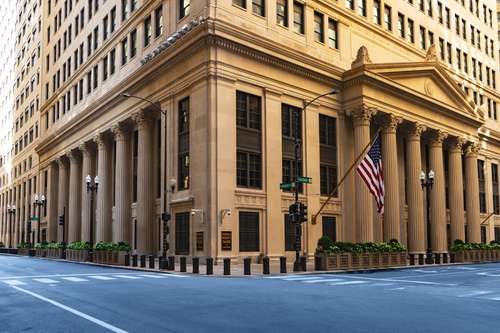
The official justification for the DOJ Fed probe 2026 centers on the massive modernization project of the Marriner S. Eccles Building. The project's costs have ballooned from an initial $1.9 billion to over $2.5 billion, drawing ire from the Trump administration. Prosecutors are specifically investigating whether Powell provided false testimony to the Senate Banking Committee in June 2025 regarding these costs and the inclusion of alleged luxury amenities.
Administration officials, including OMB Director Russell Vought, have characterized the Jerome Powell building renovation as "ostentatious," citing rumors of VIP dining rooms, rooftop gardens, and private elevators. In a defiant video statement released Sunday night, Powell categorically denied these claims, labeling them "misleading and inaccurate." He emphasized that the renovation was necessary for asbestos removal and updating century-old infrastructure, asserting that the Fed has been fully transparent with Congress throughout the process.
"This new threat is not about my testimony last June or about the renovation of the Federal Reserve buildings," Powell stated, staring directly into the camera. "Those are pretexts."
The Real Battle: Control Over Interest Rates
Most analysts agree that the Jerome Powell criminal investigation is a proxy war for control over U.S. monetary policy. Since the start of his second term, President Trump has relentlessly pressured the Fed to slash interest rates to stimulate growth, arguing that the central bank's caution is strangling the economy. While the Fed has initiated rate cuts, the pace has been too slow for the White House, fueling the Trump interest rate battle.
The President has made no secret of his desire to reshape the Fed. Last year, the administration attempted to fire Fed Governor Lisa Cook—a move currently tied up in the Supreme Court—and has repeatedly threatened to remove Powell before his term expires in May 2026. By launching a criminal probe, the Justice Department, led by U.S. Attorney for D.C. Jeanine Pirro, appears to be seeking a "for cause" justification to oust the Chair or force his resignation.
A Unified Defense of Independence
The aggression against Powell has triggered a rare unified defense from the economic establishment. In a joint statement, former Fed Chairs Janet Yellen, Ben Bernanke, and Alan Greenspan condemned the investigation as a dangerous erosion of democratic norms. They warned that politicizing the central bank could lead to runaway inflation and a loss of global confidence in the dollar.
Legal and Market Implications
The Trump Federal Reserve subpoenas present a constitutional crisis with few parallels. The Federal Reserve Act was designed to insulate monetary policy from short-term political pressure, but it did not foresee a criminal indictment of a sitting Chair by the executive branch. Legal scholars are divided on whether a President can effectively decapitate the central bank's leadership through the Department of Justice.
Markets have reacted with predictable volatility. Futures tumbled on the news, with investors fearing that the uncertainty could paralyze the Fed's decision-making process. If Powell is indicted or forced to step down, it remains unclear who would take the helm, or if the Fed Chair Jerome Powell news will force the FOMC to bend to political will—a scenario that could fundamentally alter the landscape of the American economy.
"The threat of criminal charges is a consequence of the Federal Reserve setting interest rates based on our best assessment of what will serve the public," Powell concluded in his statement. "This is about whether monetary policy will be directed by political pressure or intimidation."