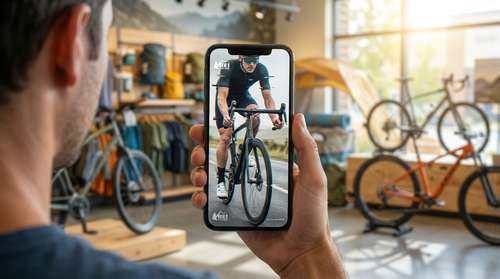
The era of artificial intelligence has gifted us many technological marvels, but it has also unleashed a relentless wave of corporate marketing disasters. The latest brand to step on the digital rake is the American outdoor recreational giant, which is currently the subject of widespread ridicule following a massive REI AI bike ad fail. Rather than showcasing the beauty of the outdoors with an authentic photo shoot, the retailer opted for an AI-generated advertisement promoting a Van Rysel road bike. The result? An image so completely unhinged from physical reality that it has united cyclists and graphic designers alike in sheer disbelief.
The Anatomy of an AI Slop Bicycle Advertisement
When analyzing the now-infamous REI AI generated ad, the errors compound the longer you look at it. At first glance, it might pass as a generic sunny day on the trails, offering a pleasant backdrop. However, keen-eyed cycling enthusiasts quickly transformed the image into a viral game of spot-the-mistake. The mechanical and anatomical failures of this Van Rysel EDR AF AI ad are staggering. The most glaring anomalies include:
- Saddle Handlebars: A full set of drop handlebars inexplicably protruding backward directly from beneath the seat. Critics joked the feature was meant for multi-directional riding.
- Double Brakes: A hallucinatory hybrid system utilizing both traditional rim brakes and modern disc brakes simultaneously.
- Cursed Pinkies: The cyclist gripping the front bars is sporting a freakishly long, disproportionate pinky finger alongside completely missing thumbs.
- The Hover Foot: One of the rider's feet is uncannily hovering above the pedal, completely disconnected from the bicycle's drivetrain.
Mechanically, the bike is an absolute nightmare that defies the basic laws of physics, making it arguably the worst AI slop bicycle advertisement published to date.
Social Media Roasts the Bizarre AI Image Mistakes
It took mere hours for the cycling community to notice the absurd discrepancies, triggering a flood of sarcastic comments across platforms like Reddit and cycling forums. On the popular cycling site Road.cc, columnists seized the opportunity to tear into the generative AI trend, praising the sarcastic commenters who congratulated the brand for designing a bike specifically tailored for extraordinarily flexible riders. For a community known to debate the millimeter geometry of a frame, these bizarre AI image mistakes provided prime comedic fodder.
What elevated this from a simple graphical error to a prominent REI advertising controversy 2026 is the sheer length of time the image remained live. The baffling post was reportedly active for five full days without anyone on the marketing team seemingly reviewing the anatomy or mechanics of the image. The gross oversight has led to rampant speculation about the corporate reliance on cheap social media management agencies, unchecked automated ad generation, and the absence of quality control in modern marketing. Users expressed pure frustration that no human editor bothered to give the image a second glance before publishing it to a massive audience.
Alienating the Core Outdoor Audience
This isn't just one of those standard funny AI marketing fails; it strikes directly at the core of the retailer's foundational brand identity. REI has historically built its reputation on encouraging people to explore the great outdoors, famously closing its doors on Black Friday to urge employees and shoppers to spend time in nature. Loyal customers have expressed intense disappointment that a company celebrating the wilderness would resort to generating fake, indoor-rendered digital landscapes instead of employing human photographers and featuring real riders in natural environments.
For a retailer that promotes authenticity and sustainability, this move feels incredibly out of touch. Forum users pointed out the painful irony of a supposedly eco-conscious, outdoor-loving company refusing to actually go outside to photograph their products. Opting instead for artificial scenes cooked up by a machine sends a conflicting message to consumers who invest heavily in authentic gear for real-world adventures.
The Growing Trend of Lazy Marketing Tactics
Unfortunately, the cycling industry has seen its fair share of AI blunders recently. Specialized faced similar backlash for a bizarre image of a double-wheeled cassette, though they blamed a website glitch rather than generative AI. When brands attempt to cut corners by feeding prompts into software rather than hiring professionals, the result is almost universally mocked. Algorithmic images rarely succeed in niche sports because the neural networks fundamentally do not understand how components interact, how weight distribution works, or how a human properly sits on a frame.
The REI incident serves as a glaring warning to other brands tempted by the low cost and high speed of algorithmic art generation. While the technology can certainly streamline specific backend processes or assist in brainstorming, slapping raw, unedited AI content onto a customer-facing promotional campaign carries immense reputational risk. Cycling is a highly technical sport, and its enthusiasts are deeply passionate about the gear they ride. You simply cannot fake gear specs to an audience that debates the aerodynamic drag coefficients of water bottle cages.
A Lesson in Authenticity
Ultimately, consumers crave connection and reality, especially in the outdoor and fitness sectors. While the short-term financial savings of bypassing a photoshoot might look appealing on a quarterly spreadsheet, the long-term erosion of brand trust is a heavy price to pay. Until algorithms learn that humans do not ride with extra handlebars sprouting from their buttocks, companies will need to keep human designers firmly in the loop.
For now, the Van Rysel AI catastrophe will live on in internet infamy as a legendary reminder that sometimes, taking a physical camera outside is still the absolute best marketing strategy available.