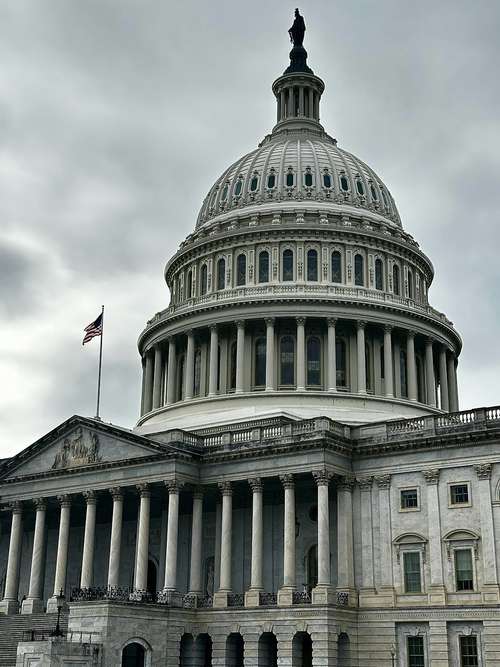
In a significant bipartisan rebuke of executive authority, the U.S. Senate voted 52-47 on Thursday to advance a Senate war powers resolution aimed at limiting President Trump's military actions in Venezuela. The vote comes less than a week after the dramatic Nicolas Maduro arrest 2026 operation, which saw U.S. special forces seize the Venezuelan leader in a midnight raid in Caracas. As Trump Venezuela news dominates the headlines, lawmakers are increasingly concerned about the administration's open-ended commitment to "run" the oil-rich nation without congressional approval.
Senate Moves to Reassert Authority
The procedural vote to advance the resolution signals growing unease on Capitol Hill regarding the scope of US military intervention Venezuela. While the operation to capture Maduro was tactically successful, the lack of a clear exit strategy has alarmed members of both parties. Five Republicans—Sens. Rand Paul, Susan Collins, Lisa Murkowski, Todd Young, and Josh Hawley—broke ranks to join all Democrats in supporting the measure. Sponsored by Sen. Tim Kaine (D-Va.), the resolution would require the President to remove U.S. forces from hostilities in Venezuela within 30 days unless Congress declares war or passes a specific authorization.
"This isn't just about one operation; it's about the Constitution," Sen. Paul told reporters after the vote. "We cannot allow a perpetual occupation of a foreign nation to proceed based solely on executive fiat." The resolution now moves to a final vote in the Senate, though it faces a steep uphill battle in the Republican-controlled House and a guaranteed veto from the White House.
Trump Plans for Indefinite Oil Oversight
The Senate's action stands in sharp contrast to the President's vision for the region. In a wide-ranging interview published Thursday, President Trump declared that U.S. oversight of Venezuela could last for "years," explicitly linking the military presence to Venezuela oil production Trump strategies. The administration has asserted control over the country's vast petroleum reserves, with Trump stating that oil revenues would be used to reimburse the U.S. for the cost of the intervention and to rebuild the Venezuelan economy.
Meeting with Oil Executives
As part of this strategy, President Trump is scheduled to meet with top executives from major U.S. energy companies, including ExxonMobil and Chevron, at the White House today. The agenda focuses on rapidly ramping up production in Venezuela's dilapidated oil sector. Administration officials have indicated they intend to bypass the acting government of Delcy Rodríguez, Maduro's Vice President, to manage oil sales directly—a move legal experts warn could violate international law and further complicate the geopolitical landscape.
The Fallout of Maduro's Arrest
The political firestorm in Washington was ignited by the Jan. 3 military operation, codenamed "Operation Absolute Resolve." The raid resulted in the capture of Maduro and his wife, Cilia Flores, who were immediately flown to New York to face federal narco-terrorism charges. Both pleaded not guilty during their arraignment earlier this week. For many lawmakers, the shift from a targeted extraction mission to a long-term occupation plan involving the seizure of national resources crosses a dangerous line.
"We were told this was a law enforcement action to capture a fugitive," said Senate Majority Leader Chuck Schumer. "Now we are hearing plans for a colonial-style administration of a sovereign nation's resources. That is not what Congress signed up for."
What Comes Next?
This Breaking political news January 9 development sets up a major constitutional showdown between the legislative and executive branches. While the War Powers Resolution is unlikely to become law given the current political math, the bipartisan support in the Senate sends a warning shot to the White House. Meanwhile, in Caracas, the situation remains volatile. Acting President Rodríguez has called for "national unity" against what she terms an imperialist kidnapping, while U.S. forces maintain a visible presence around key infrastructure sites.
As the Senate prepares for a final vote next week, the question remains: Can Congress effectively rein in a President who declares he has the authority to "run" a neighbor nation indefinitely? For now, the future of U.S. involvement in Venezuela hangs in the balance, caught between legislative attempts at restraint and executive determination to reshape the hemisphere's energy map.