Imagine returning from a relaxing two-week luxury getaway, suitcase in hand, ready to slide back into your daily routine, only to find your $100,000 futuristic pickup truck has transformed into a stainless steel paperweight. This isn't a dystopian fiction; it's the reality for one unlucky Cybertruck owner whose story went viral this week. Cybertruck holiday bricking has become the latest trending topic, proving that even the most advanced electric vehicles aren't immune to baffling failures. Despite being plugged into a home charger the entire time, the vehicle refused to wake up, sparking a ruthless wave of internet mockery that highlights the growing pains of early adoption.
The Nightmare Scenario: Plugged In but Powerless
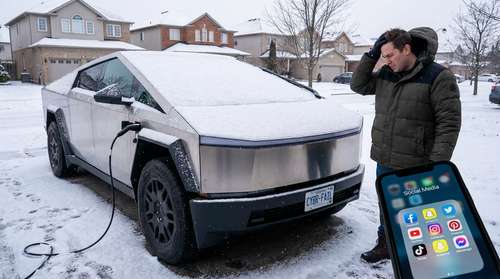
The incident, which surfaced on social media around February 8, 2026, details a scenario that should be impossible in a modern electric vehicle. The owner, confident in Tesla's "smart" charging technology, left their Cybertruck connected to a wall charger at home before jetting off for a fortnight. The expectation was simple: the vehicle would manage its own energy, sip power as needed, and be ready to roll with a full battery upon their return.
Instead, they returned to a dead silence. The truck wouldn't unlock, the screen remained black, and the Tesla app showed a connection that had severed days prior. It wasn't just low on battery; it was completely unresponsive—a phenomenon known in the EV world as being "bricked." This Tesla Cybertruck fail 2026 edition is particularly jarring because the primary safeguard against battery drain—keeping it plugged in—was exactly what the owner had done. It raises alarming questions: Did the charger trip? Did a software glitch stop the handshake? Or did the truck's onboard systems simply consume more power than the wall outlet could provide?
Vampire Drain vs. Wall Power
One theory circulating among tech enthusiasts involves "vampire drain"—the energy consumed by the vehicle's background systems, such as Sentry Mode, climate protection, and connectivity features. While a plugged-in Tesla should easily offset this drain, a glitch in the charging logic or a tripped breaker could leave the heavy-duty truck relying solely on its reserves until they hit zero. Once the low-voltage (12V or 48V) system dies, the main high-voltage battery disconnects, effectively putting the truck into a coma that often requires a service center visit to reverse.
The Internet Roasts the "High-Tech Sculpture"
As soon as the story hit Reddit and X (formerly Twitter), the viral Cybertruck social media roast began. The internet is rarely kind to six-figure failures, and this incident was red meat for critics. Users wasted no time pointing out the irony of a vehicle built for the apocalypse being defeated by a two-week nap.
"It's not a truck, it's a high-tech sculpture," one user quipped, gathering thousands of likes. Another comment that gained traction compared the vehicle to a needy toddler: "Imagine buying a car that needs more babysitting than my actual children. You can't just leave it alone; you have to emotionally support it via the app every day." The sentiment reflects a growing fatigue with futuristic car fails where basic functionality seems to take a backseat to gimmickry.
Perhaps the most cutting remark compared the situation to household appliances: "It's the modern equivalent of coming home to a fridge full of spoiled food because the plug fell out, except the fridge cost $100,000 and looks like a geometry error." These roasts underscore a significant branding problem: the Cybertruck projects an image of rugged invincibility, yet stories like this paint it as fragile and temperamental.
Why This Matters for EV Owners
Beyond the funny Tesla news headlines, this story serves as a cautionary tale for all EV owners. It highlights the importance of "stress-testing" your vacation protocols. Experts suggest that owners shouldn't just plug in and walk away. Checking the app periodically to ensure charging is actually active is now a recommended step for long-term parking.
This Cybertruck vacation story also brings attention to the specific vulnerabilities of the Cybertruck's unique 48-volt architecture. While innovative, it means that standard jump-start solutions often don't apply, leaving owners stranded in their own driveways. As Tesla continues to push the envelope with over-the-air updates, owners are finding that sometimes, the bleeding edge of technology cuts both ways.
A Wake-Up Call for the Future?
While Tesla will likely resolve this individual case—probably involving a tow truck and a master reset at a service center—the reputational dent remains. For a vehicle marketed as the ultimate utility machine, failing the "parked at home" test is a significant stumble. As electric vehicle charging glitch reports continue to surface, manufacturers may need to prioritize rock-solid reliability over the next cool feature. Until then, if you're a Cybertruck owner planning a holiday, you might want to hire a house sitter just for your truck.